Earthsea Map | Islands, Archipelago & Key Locations Explained
Uncover the Earthsea map with detailed insights on Havnor, Roke, Gont, the Kargad Lands, and Reaches. Navigate the archipelago like never before.
Author:Finn WildeReviewer:Michael RachalSep 11, 202534.4K Shares637.7K Views
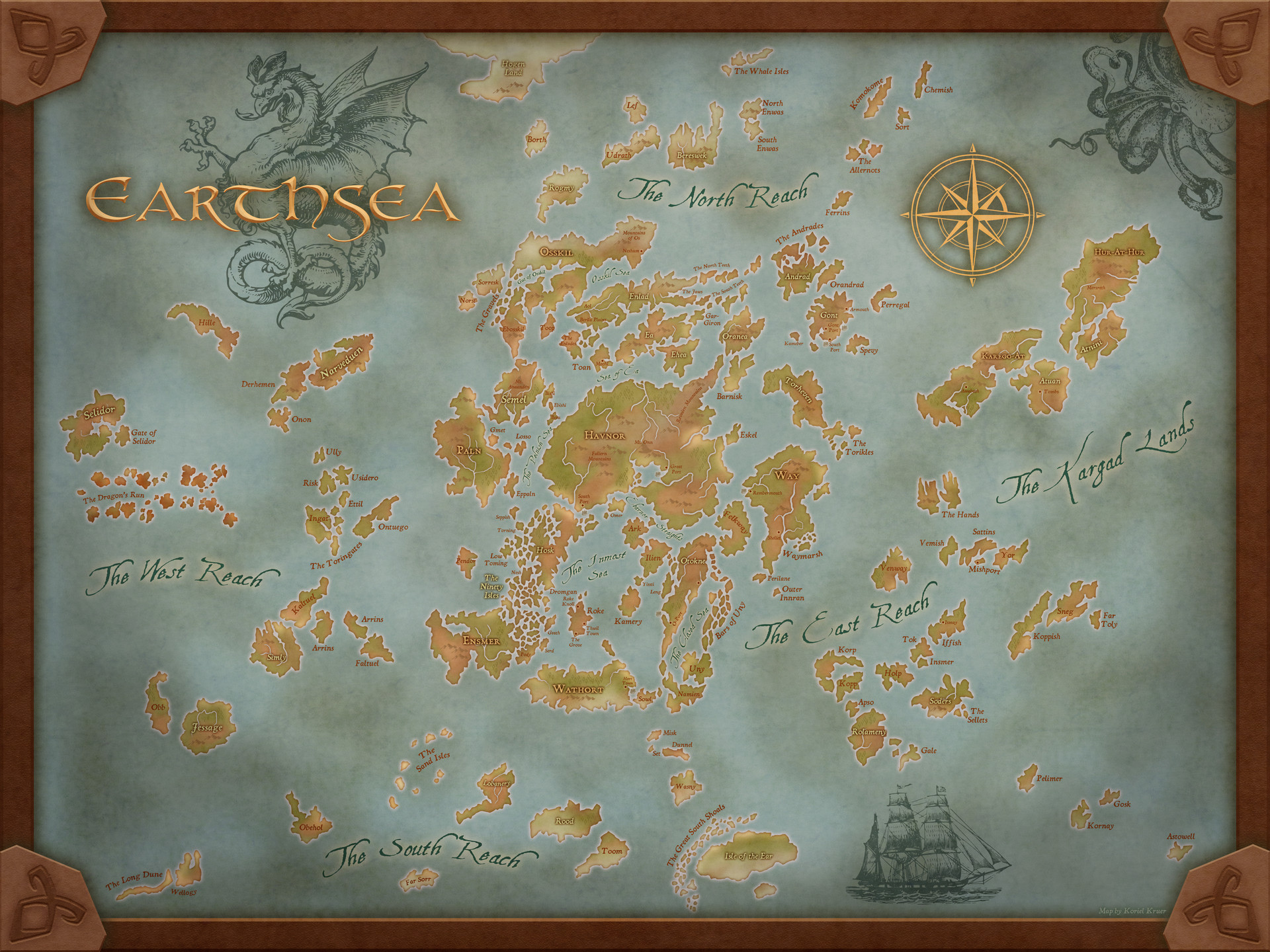
Guide To The Earthsea Map And Its Legendary World
For fans of Ursula K. Le Guin’s Earthsea Cycle, the map is more than just a guide; it’s a character in its own right. The intricate web of islands, archipelagos, and seas isn't just a backdrop for the narrative-it's the very foundation of its existence.
From Ged’s perilous voyages to the subtle balance of magic and power, every event is deeply rooted in the geography of this world. But while many have tried to find a definitive, high-quality representation of the Earthsea map, truly capturing its significance can be elusive.
The maps you've likely encountered online are often blurry reproductions or simplified fan creations. They serve their purpose, but they fail to capture the rich detail and narrative importance of Le Guin's world.
This isn't just a collection of islands; it’s a meticulously crafted universe where geography informs destiny. By exploring the history of these maps and the key locations that define them, we can truly appreciate the masterful storytelling that makes Earthsea an enduring classic.
How The Map Was Born: An Author's Act Of Creation
Before a single word of A Wizard of Earthseawas written, Ursula K. Le Guindrew the world. She later confessed that the process of drawing the map was an act of discovery-a way of researching a nonexistent history and finding out what happened next.
This detail is crucial; it shows that the geography of Earthsea wasn't an afterthought but the very seed from which the story grew. The islands' placement dictated the journeys, and the journeys shaped the characters.
Decades after its first publication, Le Guin meticulously recreated her original map, tracing the version from early book editions. This new, clean rendition became a treasured artifact for fans.
Its elegant, minimalist style, with its focus on the essential relationships between land and sea, laid the groundwork for the more detailed versions that would follow.
The Creation Of Éa: An Act Of Naming
According to the oral traditions of Earthsea, the world’s very existence is tied directly to the power of names. The oldest part of its lore, a 31-stanza poem, describes how the god-like figure Segoy raised the islands from the ocean by simply naming them.
This origin story highlights the central tenet of Earthsea's magic: knowing the true name of something gives you power over it. The map, therefore, is not just a collection of places but a list of the true names that define the world.
Earthsea's Geography
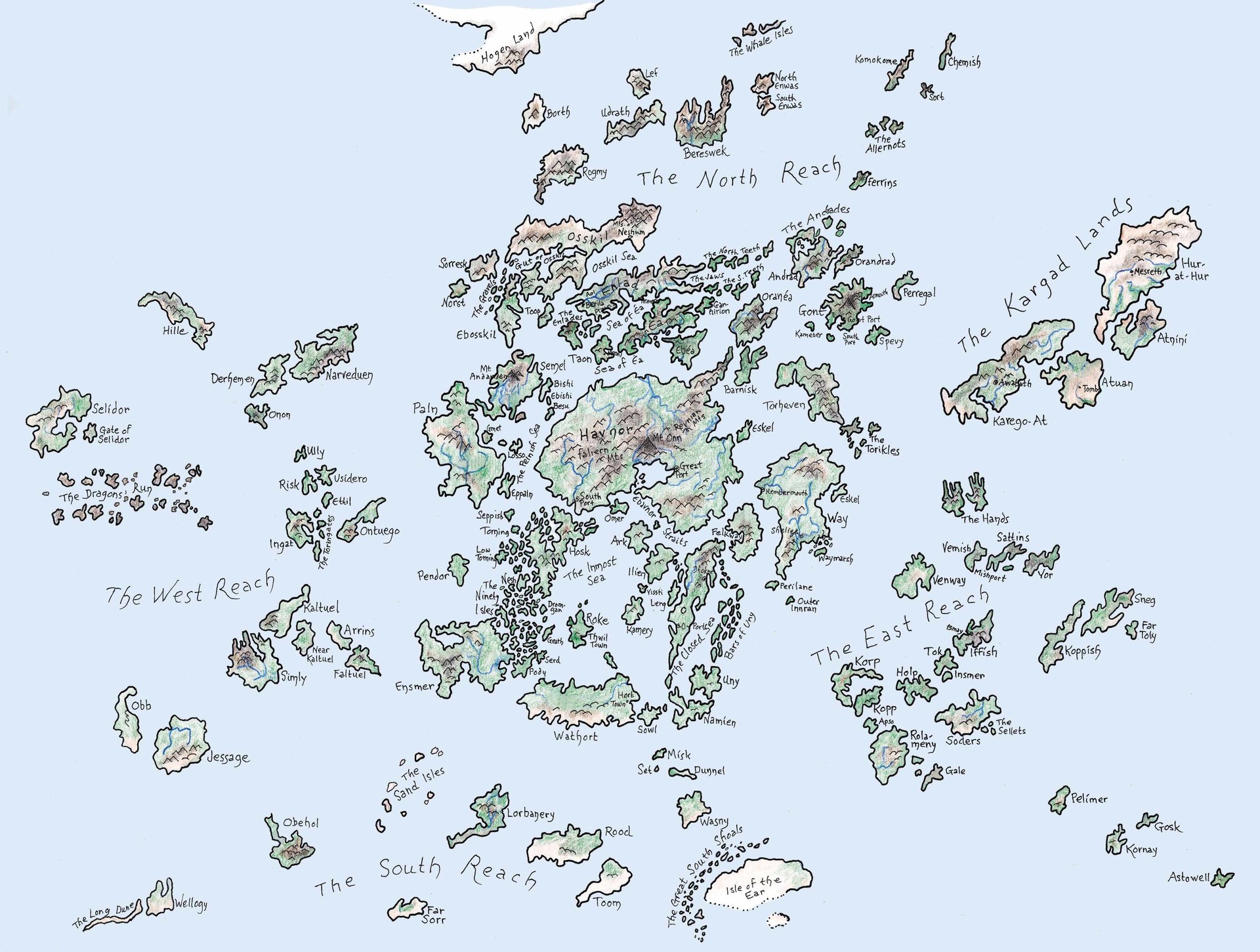
The world of Earthsea is a vast archipelago of thousands of islands, much like the Pacific island nations of Indonesiaor the Philippines. It has no major continents. The term "archipelago" is used to refer specifically to the central grouping of islands around the main island of Havnor and the Inmost Sea. The outlying islands are organized into four "Reaches" (West, North, South, and East) and the Kargad Lands.
The Heart Of The Archipelago
The Inner Sea is the cradle of civilization and the heart of the Archipelagos. Its largest island, Havnor, is comparable in size to Sicily or Great Britain. It is the political and cultural center of the world.
Roke
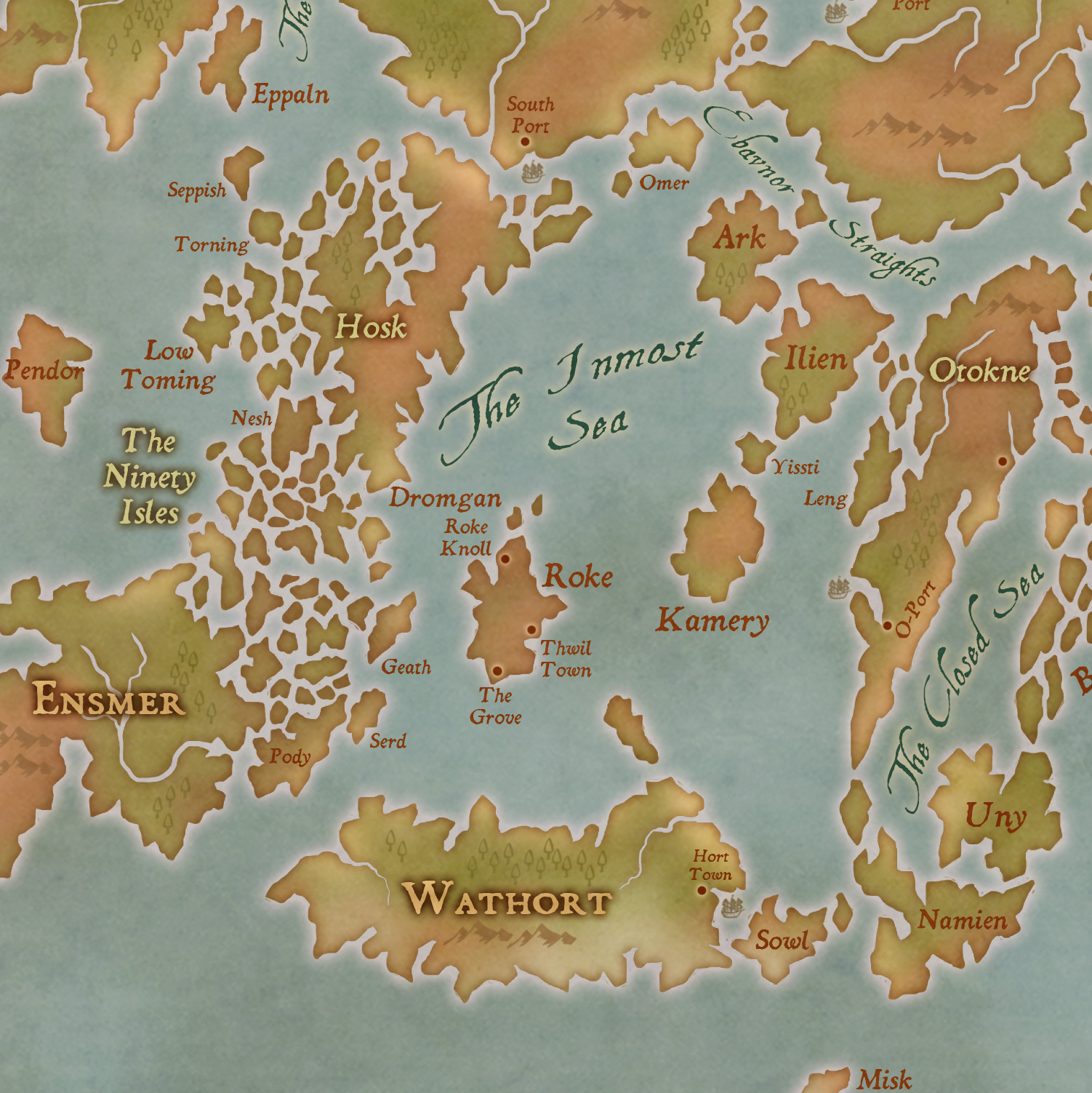
South of Havnor, within the Inmost Sea, lies the small but legendary island of Roke. Though tiny, its role is immense: this is the site of the School of Wizardry, where Ged and countless others trained in the arcane arts.
The island’s geography reflects its narrative purpose-isolated, ringed with magical protections, and nearly impossible to reach without consent. On the map, it may appear as a speck. In the story, it is the moral and magical anchor of Earthsea.
Gont
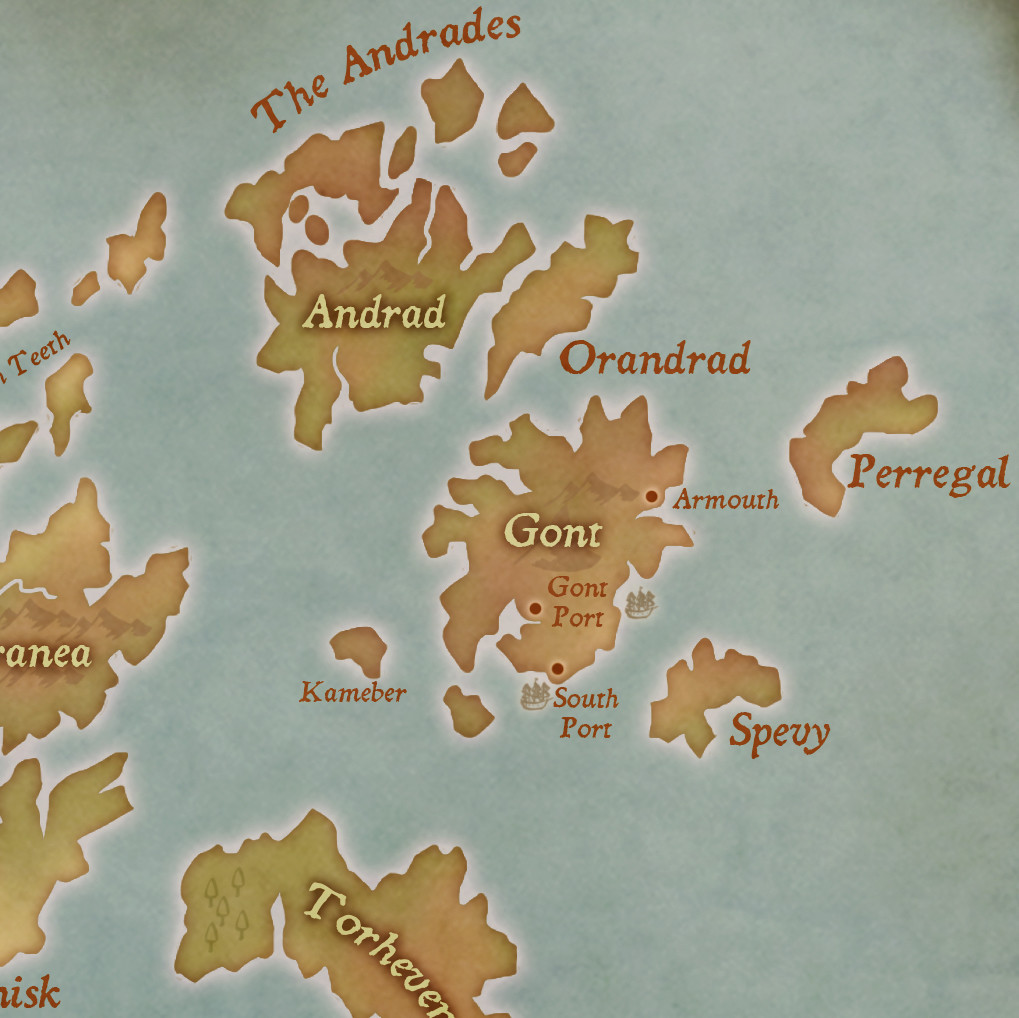
Far to the northeast rises Gont, a craggy, mountainous island whose isolation has shaped its people into hardy, independent folk. This is where Ged was born and where his fiery personality was tempered.
The landscape itself feels like a character-steep cliffs, storms, and forests that demand self-reliance. Gont’s placement on the map reinforces Ged’s origins: a boy from the edges of the known world, destined to reshape its center.
The Reaches And Kargad Lands
Venture outward, and the map reveals a world of greater mystery and danger. The further from the center you go, the more the rules of magic and society change.
The Kargad Lands
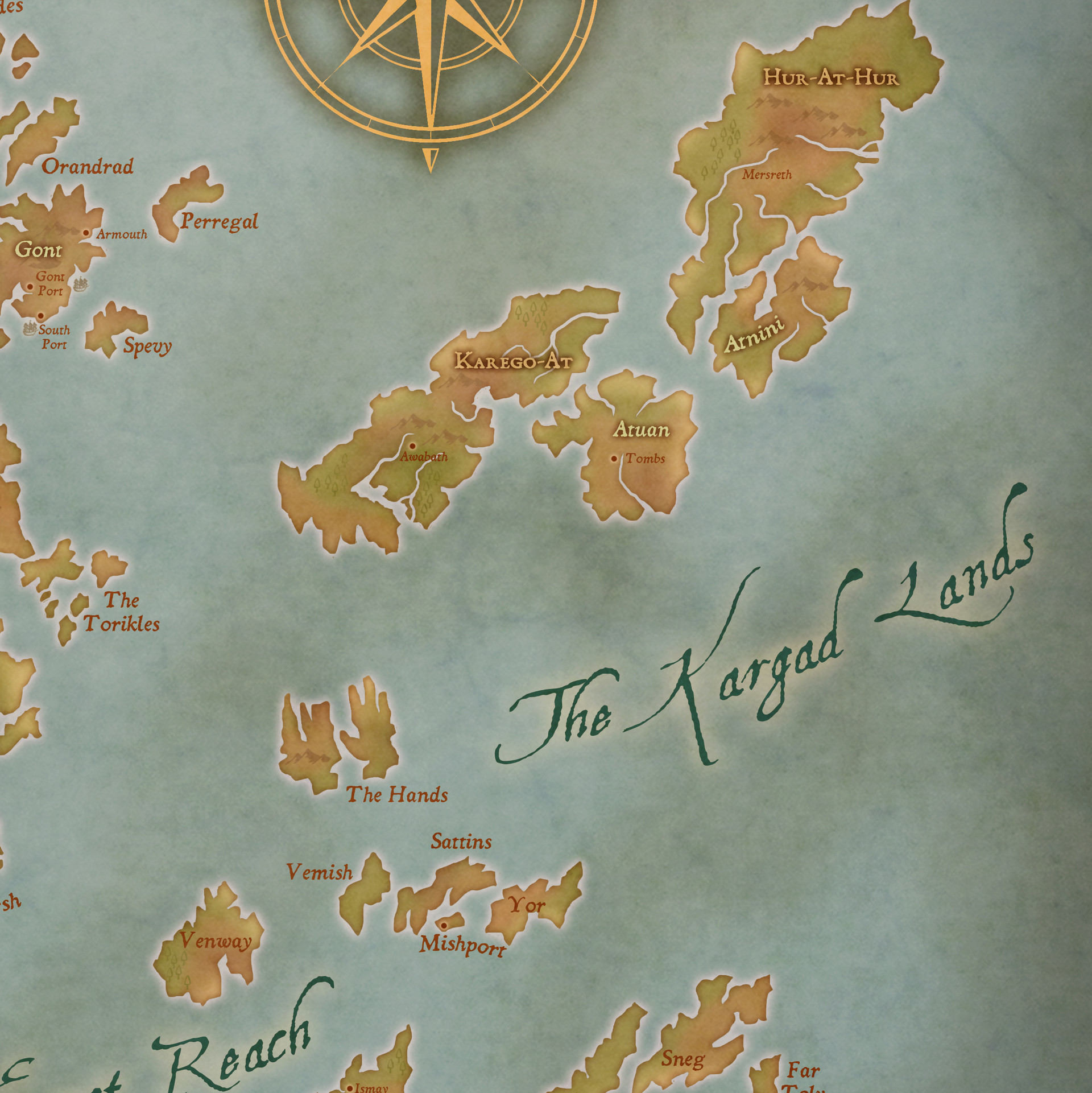
In the far northeast stand the Kargad Lands, four large islands ruled by emperors and inhabited by the fierce Kargish people. Unlike the Hardic-speaking cultures of the Archipelago, the Kargs are pre-literate, with oral traditions instead of written lore.
Their suspicion of writing and magic sets them apart: where the Archipelago reveres wizardry, the Kargs often view it as dangerous sorcery. This cultural divide drives much of the early conflict in A Wizard of Earthseaand continues to influence later stories.
The Reaches
Stretching in all directions from the Inner Sea, the Reachesform the boundaries of the known world. Life here is more fragmented, diverse, and shaped by harsher conditions.
North Reach
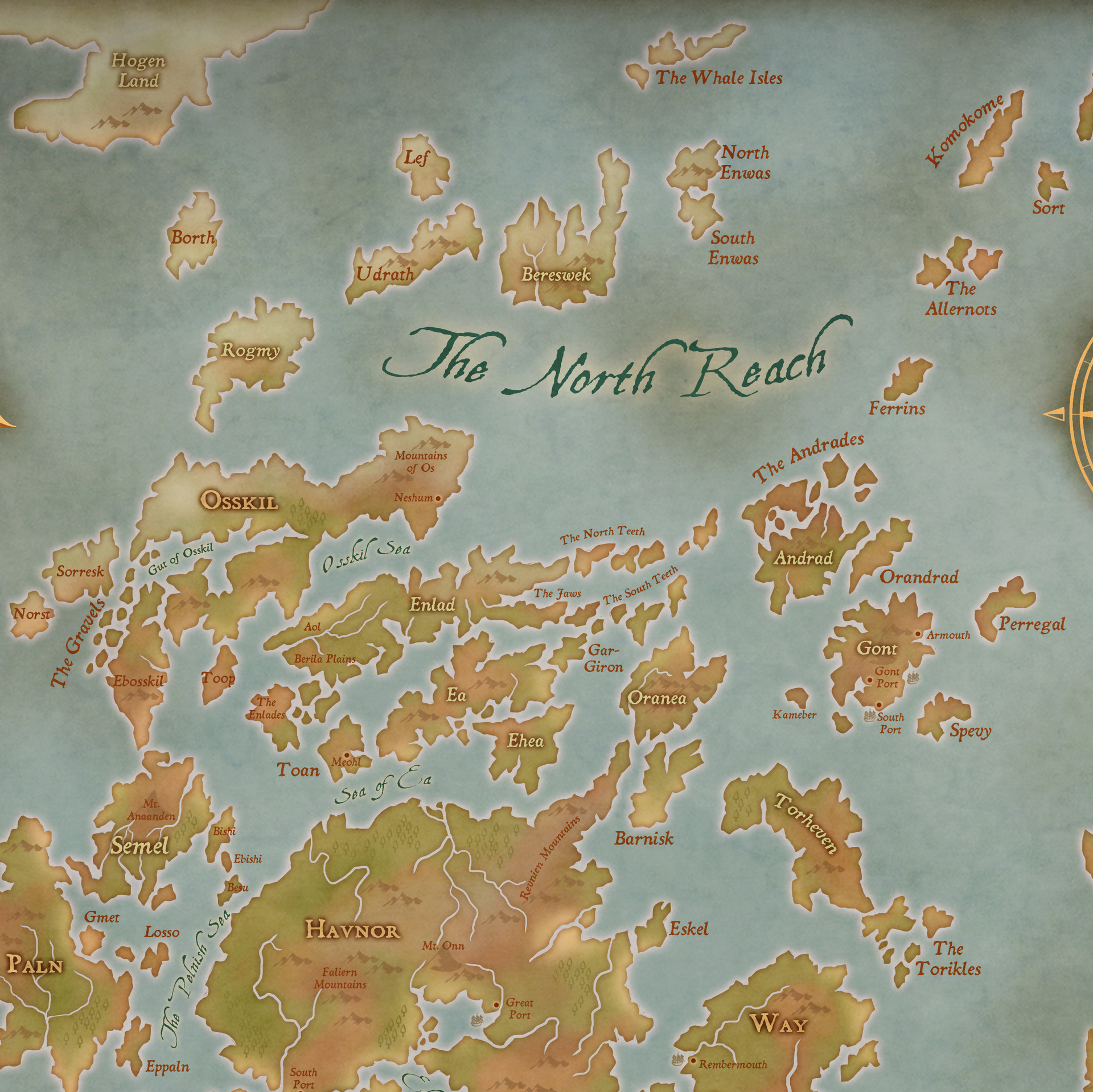
Cold seas and long winters dominate this region. The islands here are sparsely inhabited, with fishing and hunting forming the backbone of survival. Legends of strange creatures and half-forgotten powers linger in the snowbound landscapes.
East Reach
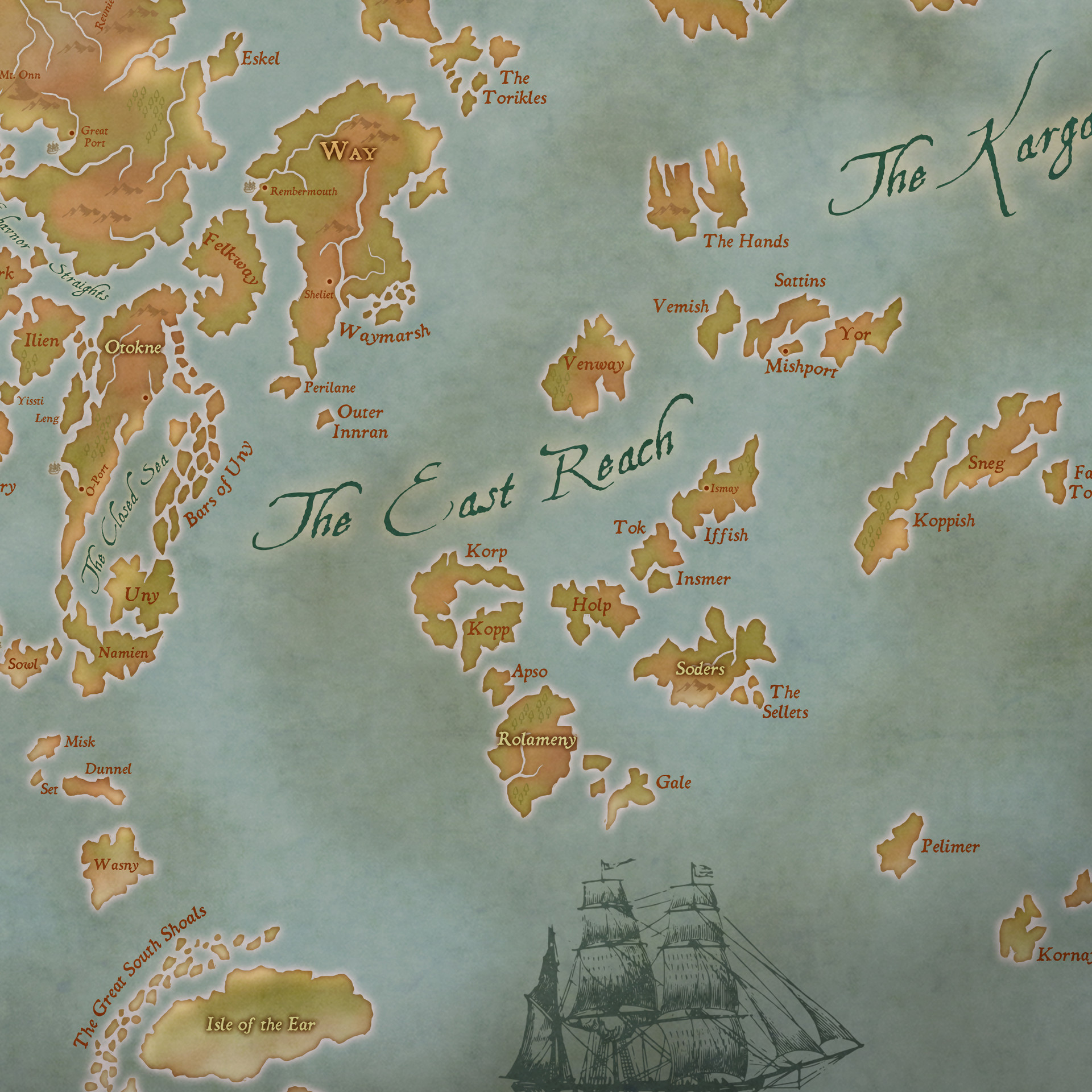
Known for its isolation, the East Reach is dotted with smaller islands and is often where traders, wanderers, and exiles end up. It has a more mystical reputation, with local traditions diverging widely from those of the Archipelago.
South Reach
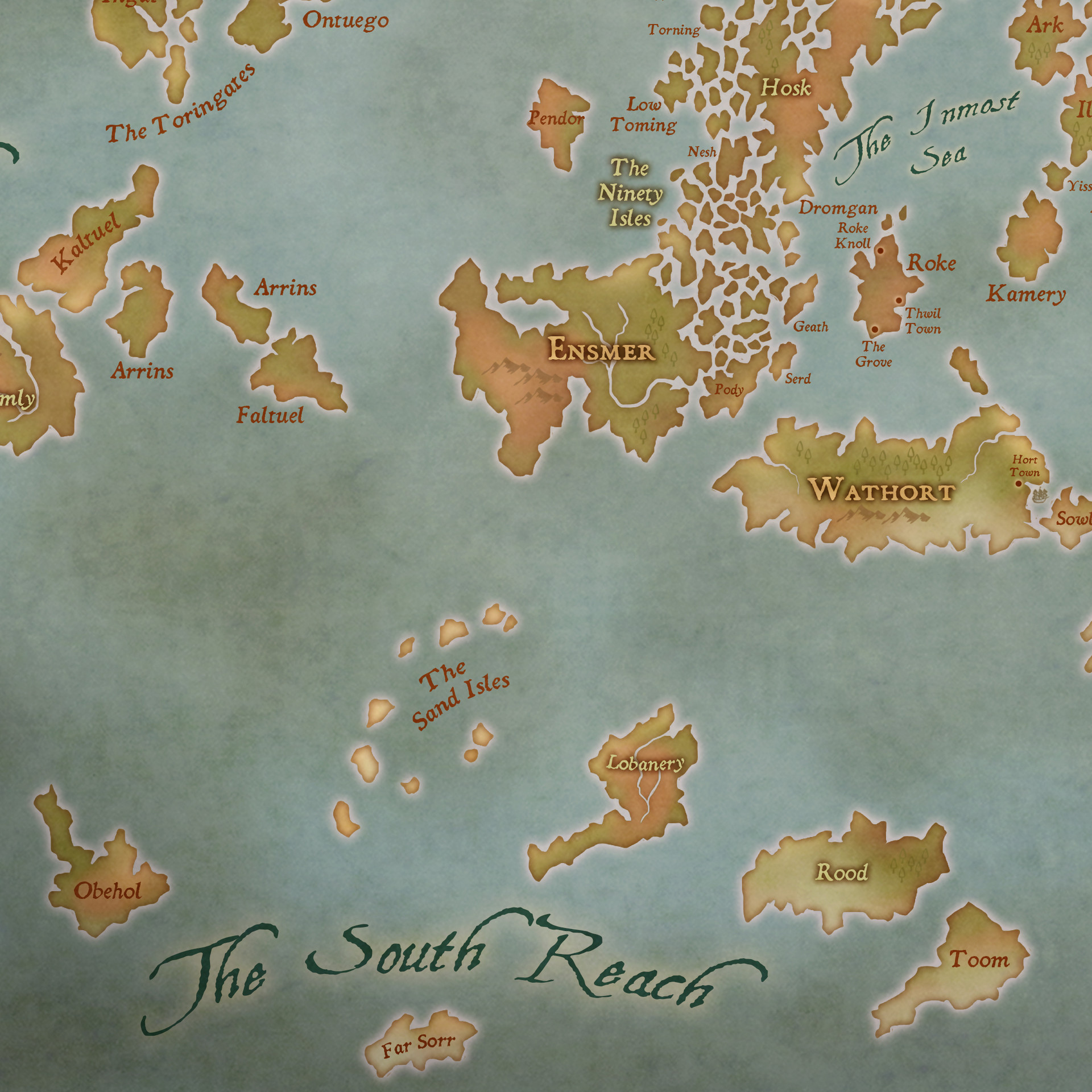
Warmer seas and tropical climates define this area. Its lush islands, though fertile, are prone to storms, making life both abundant and precarious. The South Reach often symbolizes the untamed edges of Earthsea, rich in natural beauty but outside the structured order of Havnor and Roke.
West Reach
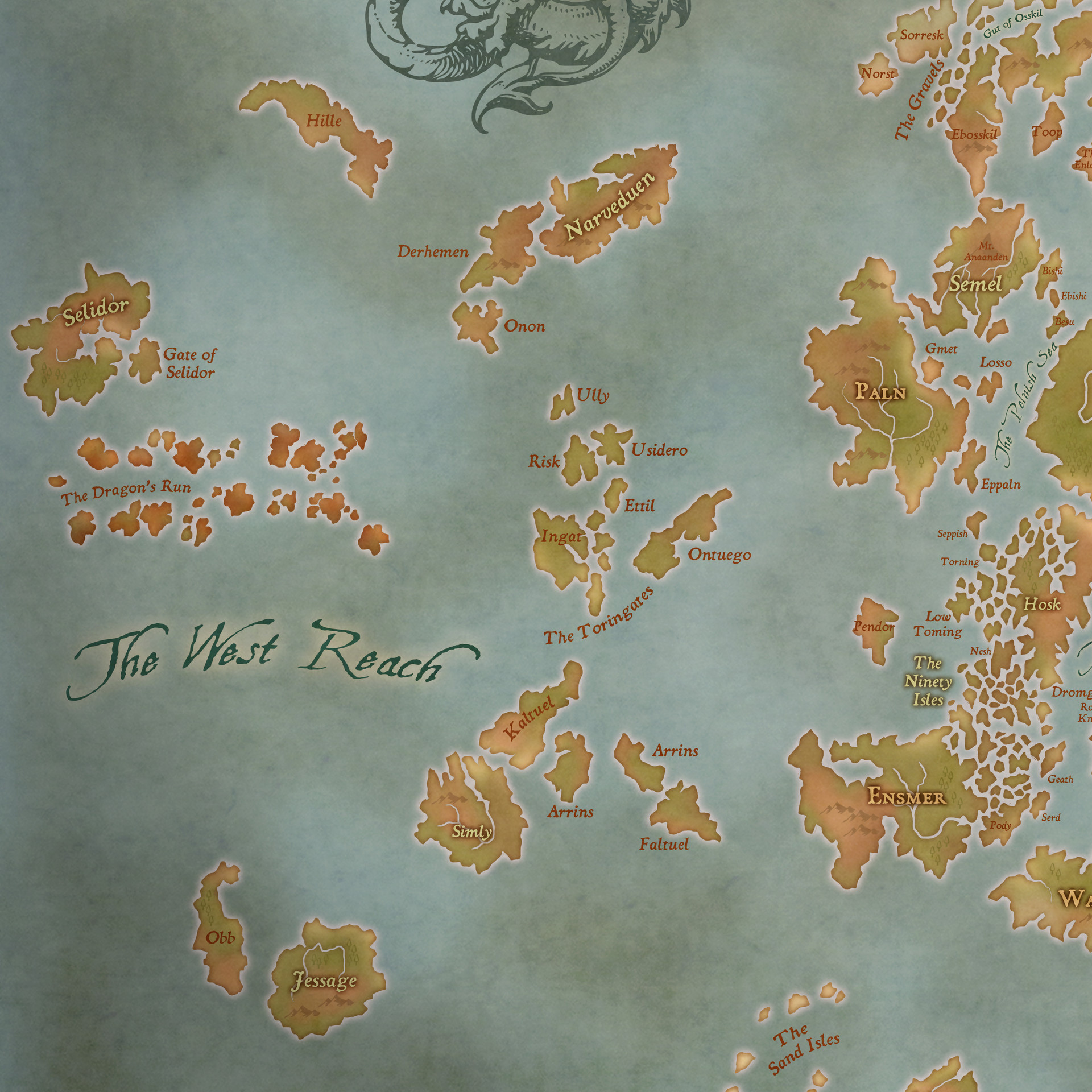
The least understood of all, the West Reach lies at the edge of maps and myths. Few sailors venture so far, and fewer return. Its remoteness makes it a blank space in both cartography and storytelling, embodying the vast unknown beyond Earthsea’s fragile human sphere.
The Magic Of Earthsea Explained
Magic in Earthsea is a central part of life, with the notable exception of the Kargish lands, where it is banned. It is an inborn talent that can be developed with training, and its practice is woven into the fabric of society through various roles, from weather workers on ships to court sorcerers.
At its core, Earthsea's magic is a direct reflection of its deep, Taoist-inspired themes of power and responsibility. "Good" wizardry is an act of working in harmony with the world and its natural equilibrium, while "bad" wizardry, such as necromancy, can catastrophically upset the balance.
Magic on Earthsea is primarily verbal. Everything has a true name in the Old Speech, the ancient language of the dragons. One who knows the true name of an object, person, or force has power over it.
For this reason, a person's true name is kept a closely guarded secret, revealed only to those they trust implicitly. A public "use" name, like Sparrowhawk for Ged, suffices for everyday purposes.
One vital aspect of this verbal magic is that it is impossible for humans to lie in the Old Speech. This means magic works by forcing the universe to conform to the words spoken by the magician.
For example, to say "I am an eagle" in the Old Speech means the speaker transforms into an eagle, making the statement true by its very utterance.
The School Of Roke And Its Masters
The School of Roke is the magical heart of Earthsea. Founded as a refuge for magicians fleeing conflict, the school grew in power, with its leader, the Archmage, eventually becoming second only to the king. The wizards of Roke remained loyal to the balance, never trying to usurp power, even during the long interregnum without a king.
Teaching at the school is conducted by the Nine Masters, each a specialist in a distinct field of magic:
- Master Windkey:Controls weather.
- Master Hand:Deals in illusions.
- Master Herbal: Versed in healing.
- Master Changer:Skilled in transformation.
- Master Summoner: Calls or summons.
- Master Namer:Teaches the rudiments of True Speech.
- Master Chanter:Teaches music and chanted spells.
- Master Patterner: Seeks meaning and intent.
- Master Doorkeeper: The guardian of the school's gates.
The Map's Role In The Story
The Earthsea map is a powerful narrative tool. Its very design-a fragmented world of islands-directly reflects the themes of balance, journey, and the duality of light and dark.
Unlike a typical fantasy map with a central kingdom and surrounding wilderness, Earthsea's geography forces its heroes to be voyagers. The constant travelby sea is not just an aesthetic choice; it's a core mechanic of the story.
The journey of the young mage Ged in A Wizard of Earthseais a literal chase across the map. After his arrogance unleashes a shadow creature, the novel follows him as he flees and then pursues this creature across the vast archipelago.
He travels from his home on Gont, to the wizarding school on Roke, to the dangerous and remote islands, with the map serving as a roadmap for both his physical and spiritual development. He eventually learns to confront the shadow and accept its place within him, a powerful lesson about the balance between light and dark.
Related Reading: Antarctic Circle Map | Facts, Location & Scientific Importance
Creatures And Beliefs Of The Earthsea World
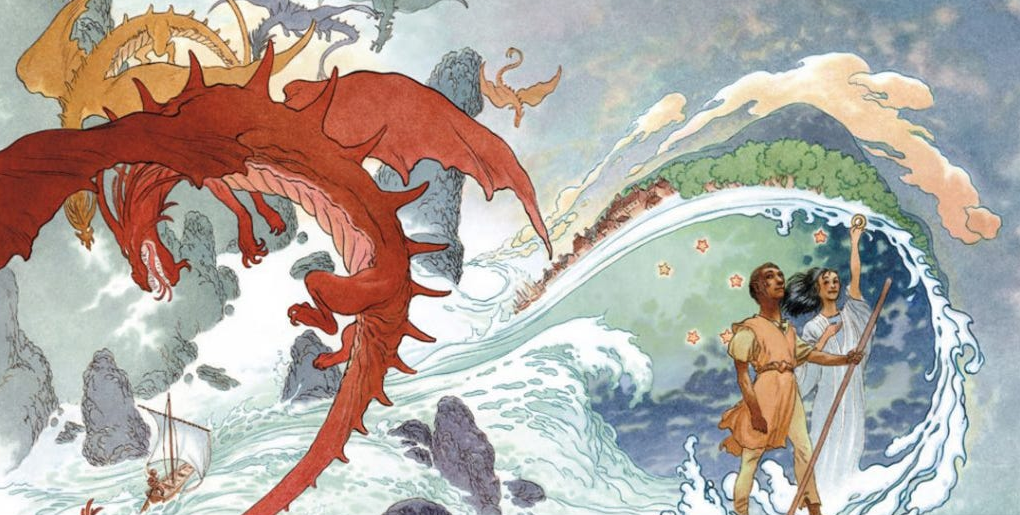
Beyond the human cultures and powerful wizards, the world of Earthsea is home to unique creatures and spiritual beliefs that shape its history and lore.
The Dry Land And Its Purpose
The Dry Land is where the people of Earthsea go when they die. It is a grim realm of shadow and dust, where nothing changes and "lovers pass each other in silence." It is not a natural afterlife, but a failed attempt by early mages to gain immortality.
They walled off a portion of the world to create a paradise for their souls, but their hubris caused its beauty to vanish, trapping the dead in a meaningless, eternal night. The Other Windrecounts how the wall around the Dry Land is eventually destroyed, freeing the souls to re-enter the cycle of life and death.
Dragons And Dragonlords
The dragons of Earthsea are neither good nor evil by human standards, but they are always dangerous. They reside in the far western reaches of the world, speaking only the Old Speech. Dragons cannot lie, but they are masters of twisting words to mislead the unwary.
It is revealed that humans and dragons were once a single race before choosing to part ways. A Dragonlord is not a master of dragons, but rather a rare individual, like Ged or Erreth-Akbe, "one the dragons will speak with" rather than eat.
Other creatures also inhabit the world, including the fearsome Gebbeth, a person consumed and controlled by an external power; the rare, furry carnivores known as Otaks; and the enormous, rock-handed Trolls.
Religion In Earthsea
The people of the Archipelago do not worship gods, but they revere the "Old Powers" of the Earth, which existed since before the islands were named into existence. These include entities like "The Nameless Ones" worshipped in Atuan.
In the Kargad Lands, however, gods are revered, and the mortal rulers, known as God-Kings, even declared themselves deities. This fundamental difference in belief systems is a source of great conflict and misunderstanding between the cultures of the Archipelago and the Kargad Lands.
Also Check Out: Red Sea Map - A Comprehensive Guide
Frequently Asked Questions About Earthsea
What Is The Earthsea Cycle?
The Earthsea Cycleis a collection of high fantasy novels by Ursula K. Le Guin that began in 1968 with A Wizard of Earthsea. The series includes The Tombs of Atuan, The Farthest Shore, Tehanu, Tales from Earthsea, and The Other Wind.
All the novels and short stories were later compiled into a single volume, The Books of Earthsea: The Complete Illustrated Edition, which featured illustrations by Charles Vess.
Is There An Official, High-resolution Earthsea Map?
Yes, but it's often hard to find online. The most definitive and detailed map is the one drawn by Le Guin's son, Theo Downes-Le Guin, for the later editions of the series. This map is much more detailed than the simpler ones found in early books and is considered the canonical version.
What Is The Significance Of The "Dry Land"?
The Dry Land is not on any conventional map of Earthsea. It is the land of the dead, a bleak, silent realm of stones and shadows. It exists outside the physical world, and a journey there is a profound act of magic and desperation, as seen in The Farthest Shore.
Who Drew The First Earthsea Map?
The first and most iconic maps were drawn by Ursula K. Le Guin herself. Her minimalist style laid the groundwork for the world's cartography, focusing on the core relationships between the key islands. The fact that she drew the map beforewriting the book highlights its central role in the creative process.
Can I Buy A Reproduction Of Ursula K. Le Guin's Original Map?
Limited edition prints of Le Guin's original hand-drawn map were recently created through a collaboration between the Ursula K. Le Guin Foundation and the Watershed Center for Fine Arts Publishing and Research.
These beautiful reproductions were made available for purchase through PM Press, with all net proceeds supporting the arts and freedom of expression. Both the color and black-and-white versions were highly sought after and have since sold out, a testament to the enduring love for her work.
Final Words
The Earthsea map is much more than a simple geographical guide. It is a work of art, a narrative tool, and a reflection of the deep philosophical themes that underpin Ursula K. Le Guin's masterpiece.
By appreciating the map’s design and its role in the story, we can gain a richer understanding of a world that has captivated readers for generations.
The islands and seas of Earthsea are not just places; they are metaphors for our own internal journeys and the balance we seek in our lives. The map is a testament to the power of a well-crafted world and a constant invitation to embark on a journey of your own.
Jump to
Finn Wilde
Author
For Finn Wilde, the wilderness is more than just a destination - it’s a way of life. Over the past decade, he has led multiple expeditions in some of the world’s most remote regions, from the icy fjords of Greenland to the rugged trails of Patagonia.
Finn emphasizes sustainability in all of his adventures, helping participants connect with nature while promoting responsible exploration. His expeditions inspire individuals to explore the great outdoors while fostering a deep respect for the environment.
Michael Rachal
Reviewer
Michael Rachal believes that luxury lies in the details. With over 20 years of experience in the luxury travel industry, he has crafted hundreds of bespoke itineraries for clients seeking personalized, unforgettable experiences.
Whether guiding clients through private cultural tours or curating culinary journeys with world-renowned chefs, Michael ensures that each trip is tailored to perfection.
His ability to anticipate needs and exceed expectations has earned him a reputation as a leading expert in luxury travel.
Latest Articles
Popular Articles