What To Do If Your Passport Is Stolen Abroad | Practical Steps To Recovery
What to do if your passport is stolen abroad becomes clearer once you understand the official process. Embassies handle this situation daily and follow strict procedures. Knowing the correct sequence protects your travel plans and your identity.
Author:Finn WildeReviewer:Liam JonesMar 05, 202616.7K Shares249.8K Views
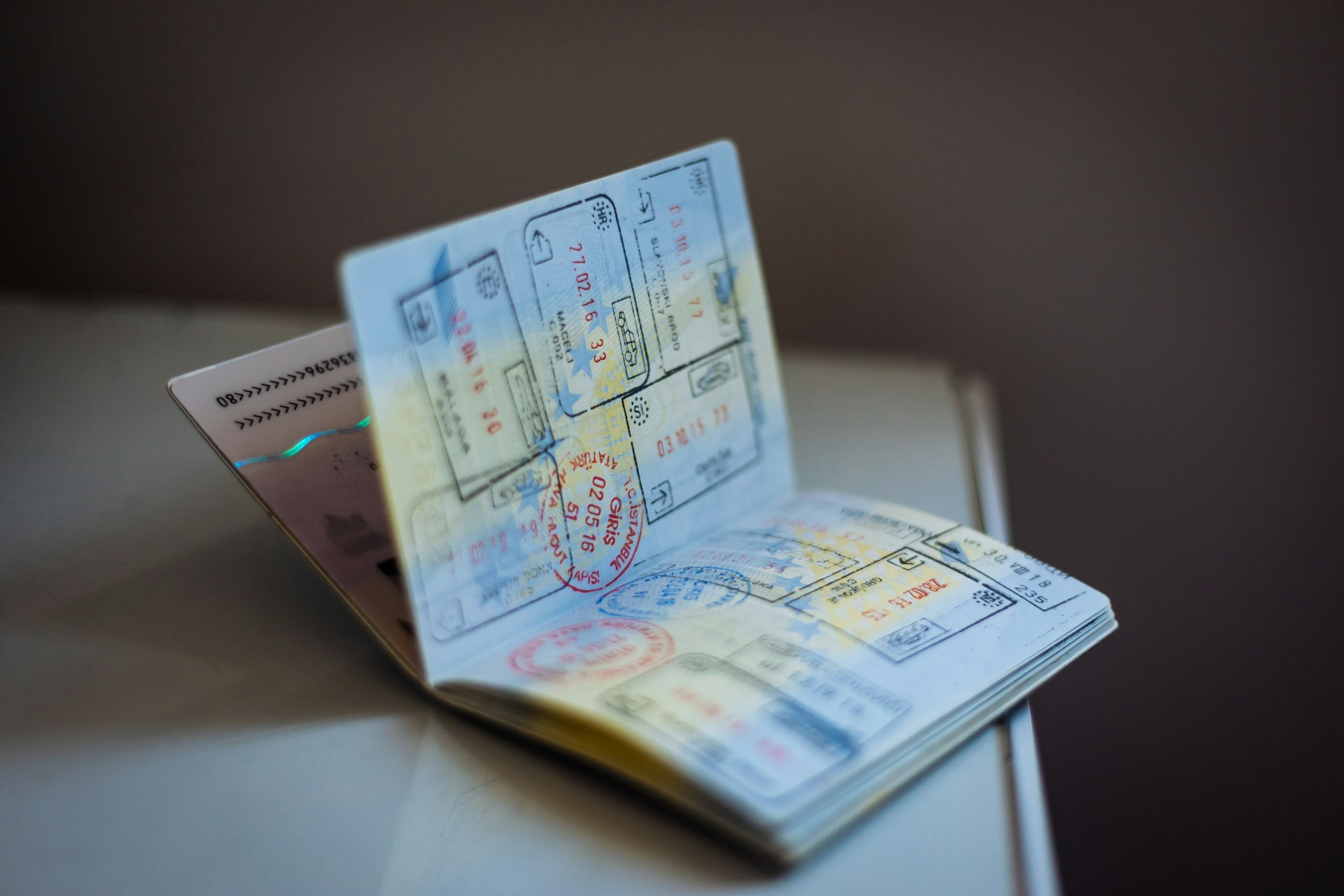
A Few Things You'll Learn From This Article:
- Your first call after a theft should be to the police, not the embassy.
- There is an important difference between an Emergency Travel Document and a full replacement passport, and choosing the wrong one can delay your return home.
- If you have no ID, no money, and a flight tomorrow, there is still a clear path forward.
- Country-specific instructions are included for US, UK, Canadian, Australian, and Nigerian passport holders.
- A step-by-step pre-travel checklist at the end can help make sure you never face this situation completely unprepared.
Having your passport stolen abroad is one of the most disorienting things that can happen during a trip. One moment you are on holiday; the next, your most important document is gone, and you are not entirely sure how to get home. It is completely normal to feel panicked.
The good news is that embassies and consulates handle this situation every single day. The process is more straightforward than most people expect, and in many cases, travellers receive emergency travel documents within 24 to 72 hours. What makes the biggest difference is knowing what to do first, what to bring, and which path matches your specific situation.
Assess Your Situation First - Your Next Steps Depend On It
Before jumping to a generic step-by-step list, it helps to know which path actually applies to you. The urgency of your situation, how much identification you still have, and whether you have money available all change what you should do first.
Path 1 - Your Flight Is In Less Than 24 Hours
Call the emergency duty officer line at your nearest embassy or consulate right now. Do not wait until morning. Most embassies operate a 24-hour duty officer line for exactly this kind of emergency. Explain that you have a flight and give them the date and time. Embassies can sometimes issue Emergency Travel Documents on the same day for travellers with imminent departures, but only if you contact them early enough to give them time to act.
While you are arranging this call, also contact your local police to file a report. You will likely need the crime reference number before the embassy will process your request.
Path 2 - You Have A Few Days Before You Need To Travel
You are in a more manageable position. File the police report first, then contact the embassy to schedule an appointment. Use the time you have to gather documents, locate a photo booth for passport photos, and notify your travel insurer. A standard Emergency Travel Document typically takes one to three business days to process, though this varies by country and location.
Path 3 - You Have No ID, No Copies, And No Money
This is the hardest situation, but it is not hopeless. Embassy staff are experienced with travellers who arrive with nothing. A sworn statement, a video call with a family member who can verify your identity, or digital records retrieved from your email can all support your case. The embassy may also be able to connect you with emergency financial assistance. Read the dedicated section on this further down before you do anything else.
Path 4 - You Are Not Certain The Passport Is Actually Stolen
Before reporting a theft, retrace your steps carefully. Check every pocket, every bag compartment, your hotel room safe, and the reception desk. A misplaced passport and a stolen one require completely different responses. Once you file a police report and cancel a passport, that document is permanently invalid even if it turns up later. Only report it stolen when you are sure.
Step 1 - Report The Theft To Local Police (Do This Before The Embassy)
The police report is not a formality. It is the document that unlocks everything else. Filing a report with local authorities serves two critical purposes. First, it flags your passport in international databases, which helps protect you from identity theft and fraud if the document is used by someone else. Second, most embassies will not process a theft claim without a crime reference number. Presenting one also tends to speed up the embassy appointment process considerably.
What To Bring To The Police Station
Bring any identification you still have, even a driving licence or a photocopy of your passport. Be prepared to describe where and approximately when the theft occurred. If the theft happened in a public place, note any details about the surroundings. If a bag was taken, list everything that was in it.
What To Do If The Officer Does Not Speak Your Language
Ask your hotel concierge or a local contact to accompany you if possible. If that is not an option, the embassy duty officer line may be able to provide a translator or a formal letter in the local language explaining your situation. Large police stations in tourist areas often have officers with some English language capability as well.
How Long You Have To File
File as soon as you realise the passport is gone, and ideally within 24 hours. There is no fixed legal deadline in most countries, but delay can complicate your insurance claim and raise questions at the embassy about the timeline of events. Once you have your crime reference number in hand, you are ready for the next step.
Step 2 - Contact Your Embassy Or Consulate Immediately
Your embassy or consulate is the only authority that can issue you a new travel document abroad. Think of this appointment as the centrepiece of the whole process because everything else feeds into it. Access to consular protection is not just a practical service, it is closely linked to broader principles of travel and human rights, including your right to return to your own country.
How To Find The Nearest Embassy Or Consulate
The US State Department maintains a full embassy directory at usembassy.gov. UK travelers can use the consulate finder at gov.uk/world/embassies. Canadians can search via travel.gc.ca, and Australians via dfat.gov.au.
If you are in a country where your home nation does not have an embassy, contact the nearest embassy of a country that has a reciprocal consular agreement with yours.
The After-Hours Emergency Duty Officer
Every major embassy operates a 24-hour emergency duty officer line for situations exactly like this one. The number is usually listed on the embassy's official website under "emergency" or "after-hours contact." Save this number before every international trip. If you are already abroad and cannot access the website, the main switchboard number can usually connect you to the duty officer outside business hours.
What To Tell Them On The Phone Before Going In Person
Call before you visit. Explain that your passport was stolen, give them your crime reference number if you have it, and tell them your nationality and the date of any upcoming travel. They will tell you what to bring, whether you need an appointment, and which type of travel document to apply for. Walking in without calling first wastes time and sometimes means being turned away to gather more documents.
What To Bring To Your Embassy Appointment
As a general rule, bring:
- Your police report or crime reference number
- Two recent passport-sized photos in your country's required dimensions
- Any proof of citizenship: birth certificate, a photocopy of your passport, or a digital scan
- Any proof of identity: driving licence, national ID card, or a credit card in your name
- Proof of your travel plans: printed or digital flight or train ticket
- Payment for any applicable fees
Missing documents are the most common reason appointments take longer than expected. Bring everything you have, even partial copies.
Emergency Travel Document Vs. Full Replacement Passport
Most travellers do not know there are two different documents available, and the difference matters more than you might expect.
What An Emergency Travel Document Is And What It Cannot Do
An Emergency Travel Document (ETD) is a temporary travel document issued by your embassy to get you home when your regular passport is not available. It is not a full passport. An ETD is typically valid for a single journey or a very short period, and in most cases, it is issued specifically to allow you to return directly to your home country. It cannot generally be used to enter third countries along the way.
Because the processing requirements are lighter, ETDs are usually faster to obtain than a full replacement passport. They are the right choice when you need to get home as quickly as possible.
What A Full Replacement Passport Is And When To Apply For One
A full replacement passport is a new, standard passport with the same validity as any other passport issued by your government. It takes longer to process, but gives you full international travel rights once issued.
If you have two or more weeks before you need to travel, or if you plan to continue your trip rather than return home, a full replacement is worth applying for. In some countries, such as the UK, a full replacement passport can only be issued domestically, so you would receive an ETD abroad and then apply for the full passport once home.
Country-By-Country Replacement Guide
The core process is similar across most countries, but the specific forms, fees, and rules differ meaningfully. Use the section that applies to your passport.
US Passport Holders
According to the US State Department, travellers who lose a passport abroad should contact the nearest US embassy or consulate as soon as possible. You will need to complete two forms: DS-64 (Statement Regarding a Lost or Stolen Passport) and DS-11 (Application for a US Passport). Do not sign either form before your appointment because the embassy staff must witness the signing.
Bring a 2-by-2-inch (5cm x 5cm) passport photo, proof of US citizenship such as a birth certificate, a government-issued photo ID, and your flight details. The standard fee is approximately $165 for adults and $135 for minors.
If you cannot afford the replacement fee, ask the consular officer about a limited-validity passport, which can be issued at no cost to allow your return home. Fee waivers may also apply if you were the victim of a serious crime or a natural disaster.
UK Passport Holders
UK travellers need to apply for an Emergency Travel Document through the nearest British embassy, high commission, or consulate. The UK does not reissue full passports to people who are abroad. The ETD fee is £100. You will need to complete Form LS01, provide a digital passport photo, your contact details, and proof of your onward travel plan.
The UK Government also operates a Passport Advice line at 0300 222 0000 or +44 300 222 0000 from abroad, available Monday to Friday 8 am to 8 pm and weekends 9 am to 5:30 pm. Once you return home, apply for a full replacement passport through the standard HMPO process.
Canadian Passport Holders
Canadian passport holders can report a lost or stolen passport online through the Canadian Passport Program at canada.ca/passport, which is a useful first step even before contacting the local embassy. You should also contact the nearest Canadian embassy or consulate for in-person assistance. Processing times and fees vary depending on location and how quickly you need the replacement.
Australian Passport Holders
Australians are legally required to report a lost or stolen passport promptly. According to the Australian Department of Foreign Affairs and Trade, failure to report on time can result in a fine of up to 100 penalty units. Contact the nearest Australian embassy or consulate immediately. Staff will advise whether you need a full replacement passport or an emergency passport for your return.
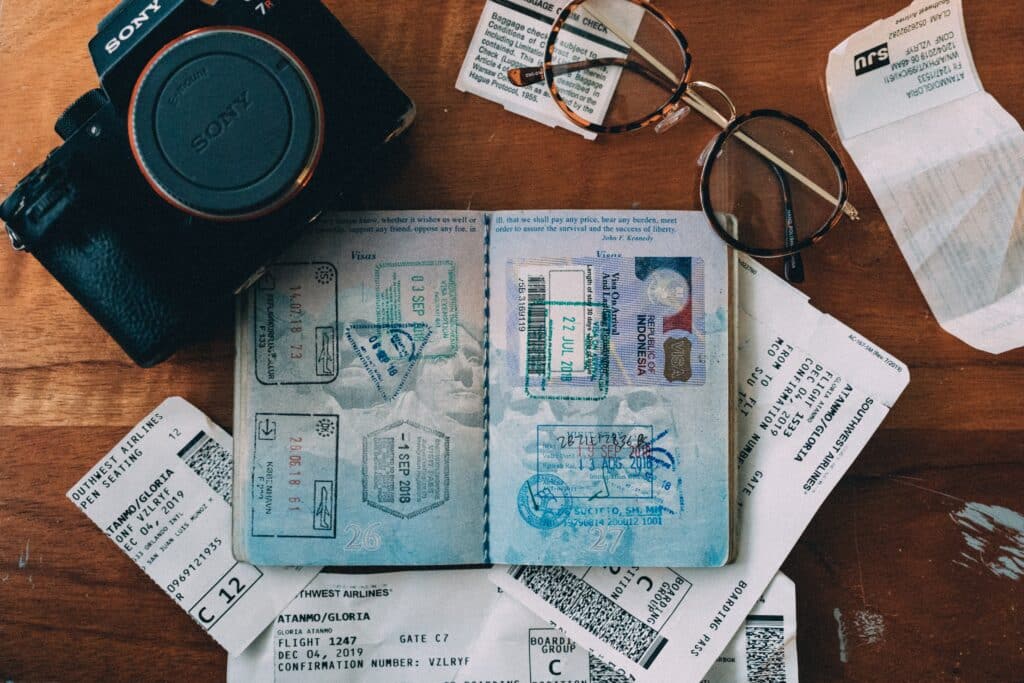
What Documents Do You Need To Replace A Stolen Passport Abroad?
Knowing the standard checklist in advance is one of the most practical things you can do before any international trip.
The Standard Document Checklist
- Police report or crime reference number
- Two passport-sized photos in the correct dimensions for your country
- Proof of citizenship: birth certificate, a notarised copy of your passport, or a photocopy
- Proof of identity: driving licence, national ID card, or credit or debit card in your name
- Proof of travel plans: flight booking confirmation or train ticket
- Payment for applicable fees
What To Do If You Have No ID Or Proof Of Citizenship At All
This situation is more common than embassies like to advertise, and there is a clear path through it. Contact the embassy before your appointment and explain that you have no supporting documents.
Embassy staff can use a range of alternatives: a sworn statement from you confirming your identity, a video call with a family member at home who can verify your identity, digital records you can access through email (scanned passport copies, driving licence photo, birth certificate), or a consular interview where staff use their own records to confirm nationality.
The key is to communicate the situation honestly and in advance. Arriving without explanation and without documents slows everything down.
Passport Photos Abroad
Most cities have photo booths or pharmacies that produce passport photos within minutes. If you are unsure about local options, the embassy receptionist can almost always direct you to a nearby location. If you are completely stranded, some embassies have basic photo facilities on-site.
What Happens To The Visas In Your Stolen Passport?
This is one of the most overlooked consequences of a stolen passport, and it catches multi-country travellers off guard.
When your passport number changes because a new passport is issued, the visas stamped in the old document are technically associated with a document number that no longer exists. In practice, the outcome depends on the country that issued the visa and whether it was a paper stamp, an e-visa, a digital passportrecord, or a digital registration.
For paper visas already stamped in the old passport, some countries allow you to present both the cancelled old passport and your new one at the border to demonstrate continuity. Others require you to apply for a new visa. Contact the embassy of each country whose visa was in the lost document and ask specifically about their policy.
For e-visas and electronic travel authorisations, the situation is often simpler. Because these are linked to your personal data rather than just a passport number, many can be updated online by entering your new passport details. Check the official website of the issuing country's immigration authority for instructions.
Multi-entry visas for countries you have not yet visited will, in most cases, need to be reapplied for, as they are tied to the specific passport number issued at the time of application.

What To Do If You Have No Money Abroad
Losing your passport and your wallet at the same time is every traveller's worst scenario. There are real options available; you just need to know where to ask.
For US citizens, the Overseas Citizens Services (OCS) division of the US State Department can arrange an emergency loan to cover the cost of a replacement passport and basic living expenses until you can access funds. This is a genuine government program, available at travel.state.gov under emergency financial assistance.
For UK, Australian, and Canadian citizens, embassies can connect you with welfare assistance options, and consular staff can help you communicate with family at home to arrange a fund transfer. Western Union operates in thousands of locations worldwide and can receive funds from a family member within hours. A bank transfer to a friend or family member in the country you are visiting may be another route if you have any functioning device with internet access.
The practical steps:Contact the embassy duty officer first and clearly explain the full situation, including your financial problem. Ask directly about any emergency assistance programs available for citizens of your country. Then reach out to someone you trust at home using any available option, such as hotel Wi-Fi, a local library, or a phone at a police station.
Travel Insurance Coverage For Stolen Passports
Travel insurance is genuinely useful here, but only if you know how to use it. Most standard travel insurance policies cover the cost of replacing a lost or stolen passport, including the embassy fees, any additional accommodation costs if you are delayed, and, in many cases, flight rebooking fees. If you booked your trip through online travel agencies, check both your insurance policy and the booking platform’s terms, as some agencies provide limited assistance services or documentation support that can help with rebooking while you wait for your replacement document.
To make a valid claim, you will typically need: the original police report or crime reference number, itemised receipts for all additional costs incurred, your insurance policy number, and a written timeline of events. File the claim as soon as possible — many policies have a notification window, and waiting too long can invalidate a claim.
Common exclusions to watch for: negligence clauses (if you left your passport unattended in a public place without reasonable precautions, some insurers may reduce or reject the claim), claims without a police report, and situations where the passport was technically "lost" rather than stolen. Some policies also exclude cover if the passport was not stored securely.
Check your specific policy document before your trip and note exactly what evidence is required for a passport-related claim. Keeping a digital copy of the policy in your email means you can access it from anywhere.
What To Do If Your Passport Is Found After You Reported It Stolen
This happens more often than you might expect. A passport slips behind a hotel drawer, turns up in a coat pocket, or is handed in at a restaurant.
Once you have reported a passport as lost or stolen and the relevant authority has cancelled it, that document is permanently invalid. It cannot be used for travel under any circumstances. If you attempt to board a flight on a cancelled passport, it will be flagged by border control, and you may face serious delays and formal questioning.
The right course of action is to contact the passport office or embassy to inform them that the document has been found, then surrender it. Your replacement passport or ETD remains the only valid travel document you now hold. Think of the found passport as useful only as a reference document, for example, when completing a replacement application that asks for your previous passport details.
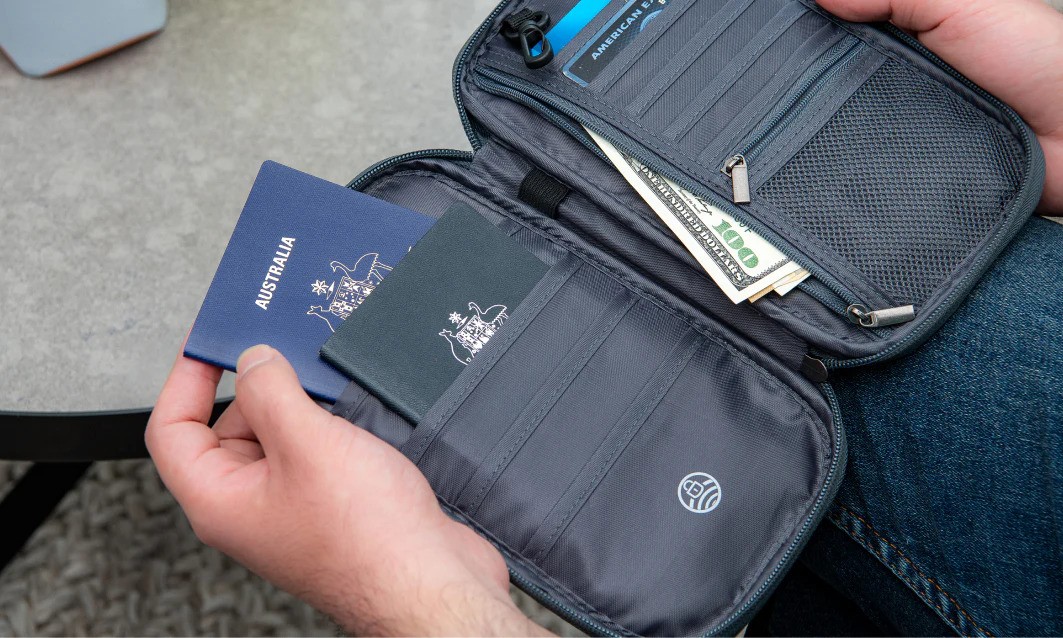
How To Protect Your Passport On Future Trips
Knowing what to do when a passport is stolen is valuable. Knowing how to avoid the situation in the first place is more valuable still.
What To Prepare Before You Leave Home
- Make two colour photocopies of the photo page of your passport. Keep one in your luggage and leave one with a trusted person at home.
- Scan your passport, driving licence, birth certificate, and travel itinerary, and email the scans to yourself. This gives you retrievable copies from any device with internet access.
- Take three or four passport-sized photos with you. If your passport is stolen, having photos on hand removes one step from the replacement process.
- Write down your passport number, issue date, and expiry date in a secure note on your phone or in a separate email to yourself.
- Save the after-hours emergency contact number for your country's embassy in each destination you plan to visit.
Safe Storage Abroad
Your passport is safest when you are not carrying it. Most hotels offer in-room safes or a front desk security service. Leave your passport there when you go out for the day and carry a photocopy instead. In countries where you are legally required to carry identification, a driving licence satisfies that requirement in most cases.
Be especially cautious in crowded tourist areas, on public transport, and at busy markets. Carry bags with zipped compartments against your body rather than over your shoulder.
Pre-Travel Passport Protection Checklist
- Photocopy the passport photo page (make two copies)
- Scan passport, driving licence, and birth certificate; email to yourself
- Pack three to four spare passport photos
- Note your passport number and expiry date separately
- Save the embassy emergency line for each destination
- Buy travel insurance that explicitly covers passport theft
- Identify the hotel safe or secure storage option at your accommodation
- Carry a photocopy rather than the original for day-to-day use abroad
Frequently Asked Questions
Can I Travel Between Countries On An Emergency Travel Document?
In most cases, no. An ETD is issued specifically for travel back to your home country and is not valid for entering third countries along the route.
Do I Have To Report A Lost Passport If I Am Not Planning To Travel Again Soon?
Reporting is strongly recommended, even without immediate travel plans. A cancelled passport cannot be used for identity fraud or counterfeiting. If you do not report it and the document is used fraudulently, you may face complications when you apply for your next passport or cross a border in the future.
Can You Revalidate Or Reactivate A Cancelled Passport?
No. Once a passport has been reported lost or stolen and cancelled by the issuing authority, it cannot be reinstated. The cancellation is permanent. Your only option is to apply for a replacement document.
Can You Travel With A Stolen Passport?
To replace a lost or stolen passport, you must submit Form DS-11 in person. If you have already reported your passport lost or stolen, the passport is no longer valid and must not be used for travel.
Conclusion
A stolen passport is a serious problem, but it can be fixed. The travellers who handle it best are the ones who follow the right steps in the right order.
If you are dealing with this right now, go back to the emergency steps at the top of this article. The rest of the article explains the details and answers common questions that come up after the first wave of panic passes.
If you are reading this before your trip, take ten minutes to prepare. Make photocopies of your passport, email a scanned copy to yourself, and save your destination embassy’s emergency number in your phone. This will not stop the problem from happening, but it will make solving it much faster and less stressful.
Jump to
A Few Things You'll Learn From This Article:
Assess Your Situation First - Your Next Steps Depend On It
Step 1 - Report The Theft To Local Police (Do This Before The Embassy)
Step 2 - Contact Your Embassy Or Consulate Immediately
Emergency Travel Document Vs. Full Replacement Passport
Country-By-Country Replacement Guide
What Documents Do You Need To Replace A Stolen Passport Abroad?
What Happens To The Visas In Your Stolen Passport?
What To Do If You Have No Money Abroad
Travel Insurance Coverage For Stolen Passports
What To Do If Your Passport Is Found After You Reported It Stolen
How To Protect Your Passport On Future Trips
Frequently Asked Questions
Conclusion

Finn Wilde
Author
For Finn Wilde, the wilderness is more than just a destination - it’s a way of life. Over the past decade, he has led multiple expeditions in some of the world’s most remote regions, from the icy fjords of Greenland to the rugged trails of Patagonia.
Finn emphasizes sustainability in all of his adventures, helping participants connect with nature while promoting responsible exploration. His expeditions inspire individuals to explore the great outdoors while fostering a deep respect for the environment.

Liam Jones
Reviewer
Liam Jones has made it his mission to prove that adventure doesn’t need a hefty budget. Having traveled to over 40 countries, he specializes in finding affordable ways to experience the world, from the best street food in Bangkok to hidden gems in Lisbon.
Liam’s travel tips have reached thousands of readers, empowering them to see the world on a shoestring budget without sacrificing quality. With a deep passion for local cultures, he continues to share his travel hacks, ensuring adventure remains accessible to all.
Latest Articles
Popular Articles