Travel Safety Tips For Families | Hotels, Transport, And Age-by-Age Advice
Get practical travel safety tips for families covering hotels, car seats, and flying with babies, organized by your child's age so advice is always relevant.
Author:Finn WildeReviewer:Liam JonesApr 14, 202611.1K Shares150.5K Views
Quick Things To Know Before Reading:
- Most family travel safety advice treats a 6-month-old and a 10-year-old the same. This article doesn't, because the risks genuinely aren't the same.
- You'll find a step-by-step hotel room safety walkthrough you can run through in under 10 minutes, even with a tired toddler on your hip.
- The section on flying with a baby explains why ear pain occurs during descent and how to manage it, not just nurse them.
- There's a complete pre-trip checklist at the end that you can save to your phone and use before every trip.
Planning a trip with your kids is exciting. It's also the kind of thing that can spiral into a fog of "but what if" questions at 11 pm the night before you leave. What if the hotel crib isn't safe? What if my baby screams on the plane? What if one of the kids gets separated from us in a crowd?
Those questions aren't paranoia. They're what good parenting looks like. And with the right preparation, almost every one of them has a practical, straightforward answer. The sections below are organized so you can read the parts most relevant to your family right now, then come back to the rest as your kids grow.
Key Safety Takeaways For Family Travel
- Use an age-appropriate, correctly installed car seat on every car journey, including taxis and rideshares.
- The American Academy of Pediatrics recommends that each child have their own seat on an aircraft, secured in a FAA-approved car seat.
- Inspect your hotel room immediately on arrival. Check door locks, balcony access, outlet hazards, and crib safety before unpacking.
- Pack a travel first aid kit with fever reducer, antihistamine, antiseptic, bandages, and any prescription medications your child takes daily.
- Before any international trip, or if your child is under 6 months, schedule a pre-travel visit with your pediatrician.
What Families Need To Know Before Applying Any Travel Safety Tip
The most useful thing you can do before reading any list of tips is to recognize that family travel safety is not one-size-fits-all.
Why Age Changes Everything
A 4-month-old's biggest risks on a trip involve sleep safety, car seat fit, and temperature regulation. A 2-year-old's risks shift toward falls, wandering, and hotel room hazards they can reach. A 7-year-old's risks are different again: crowds, water, and knowing what to do if they get separated.
Every tip in this article is labeled or grouped by the age group it applies to most directly. If you skip to the section that fits your child right now, you'll get more practical value than if you read a generic list and try to figure out what applies.
The Three-Stage Framework
Every piece of advice in this article fits into one of three stages: what to do before you leave, what to manage in transit, and what to handle at your destination. Keeping this mental map in mind makes preparation feel far less overwhelming.

5 Important Things To Do Before Traveling With Kids
A little time spent preparing before you leave can prevent the most stressful scenarios from happening at all. These five steps form the foundation of every safe family trip and cover some of the things every parent must knowbefore traveling with children.
Schedule A Pre-Trip Pediatrician Visit
This matters most if your child is under 6 months old, has a chronic condition like asthma or a heart defect, or you're traveling internationally. A travel health consultation lets your pediatrician check immunization status, recommend destination-specific vaccines or medications, and flag any concerns based on your child's individual health history.
The CDC recommends scheduling this visit at least 4 to 6 weeks before departure to allow time for vaccines to take effect. If your trip is sooner than that, go anyway because some protections can still be put in place.
Get Your Documents In Order And Back Them Up
Before any trip, photograph or scan every passport, insurance card, and travel document, then store copies in a password-protected cloud folder and on your phone. If a passport is lost or stolen, a digital copy significantly speeds up the process of getting emergency travel documents from your nearest embassy or consulate.
Also, verify that your passports won't expire within six months of your return date. Many countries will deny entry if your passport expires sooner than that, regardless of how long your trip is.
Choose The Right Travel Medical Insurance For Families
Standard health insurance often provides limited or no coverage outside your home country. Travel medical insurance fills that gap. Look for a policy that explicitly covers pediatric care, emergency medical evacuation, and any activities you're planning, such as water sports or high-altitude hiking.
For a family of four on a 10-day trip, basic travel medical coverage can often be found for under $100 USD. That's a small cost relative to what an emergency hospital visit abroad could run without it.
Pack A Family First Aid Kit That Actually Covers Kids
A good travel first aid kit for families includes: adhesive bandages in multiple sizes, antiseptic wipes, a digital thermometer, children's fever reducer (acetaminophen or ibuprofen, age-appropriate dose), antihistamine, anti-diarrhea medication, motion sickness remedies, insect repellent, and sunscreen.
Add any prescription medications your child takes, packed with enough supply to cover delays. Carry this kit in your carry-on or personal bag, not in checked luggage. You need access to it during the journey, not just at your destination.
Have A Safety Conversation With Your Child Before You Leave
For children old enough to understand (roughly 3 and up), a calm pre-trip conversation can prevent panic in stressful moments. Teach them to memorize at least one parent's first name and phone number.
Agree on a meeting place to use if you get separated at your destination. If your child is old enough, show them how to identify hotel staff or uniformed employees to ask for help.
For younger children, consider a wristband with your contact information written on it. Some parents use a simple waterproof label inside a shoe.
The goal is to prepare them without frightening them. Keep the conversation matter-of-fact: "Here's what we'll do if we get mixed up in a crowd."
Travel Safety Tips For Families On The Road
Road trips with kids can be genuinely wonderful. They can also involve a lot of car seat installation confusion, gas station pit stops, and the unsettling realization that your rental car's car seat didn't come with an instruction manual.
Choosing And Installing The Right Car Seat
Car seat safety is one of the most evidence-backed areas of child travel protection. Correctly used car seats reduce the risk of fatal injury by 71% for infants and 54% for toddlers in passenger vehicles.
Rear-Facing Car Seats - Infants And Toddlers
All infants and toddlers should ride rear-facing until they reach the maximum weight or height limit set by their specific car seat manufacturer. The AAP recommends keeping children rear-facing for as long as possible, not just until age 2, because rear-facing distributes crash forces across the whole body rather than concentrating them on the neck and spine.
Forward-Facing And Booster Seats - When To Transition
Once a child has outgrown the rear-facing weight or height limit, they move to a forward-facing seat with a harness. They stay in that seat until they outgrow its harness limits, then transition to a belt-positioning booster seat. Most children fit properly in a vehicle seat belt, without a booster, around age 8 to 12 or when they reach approximately 4 feet 9 inches tall. Children under 13 should always ride in the back seat.
Traveling With A 4-Month-Old By Car - What To Know
A 4-month-old can absolutely travel by car, with some important adjustments. Use a rear-facing infant car seat, correctly installed, for every journey. Because infants at this age cannot yet support their own heads and airways independently, limit continuous time in the car seat to no more than 2 hours at a stretch.
Stop, take the baby out, and let them lie flat for a period before continuing. Never leave a baby or young child unattended in a vehicle. Temperatures inside a closed car can reach dangerous levels within minutes, even on mild days.
Using Rental Car Seats Safely
Most rental car companies offer car seats, but availability and quality vary. If you accept a rental car seat, check that it is appropriate for your child's age and size, shows no visible damage or missing parts, and comes with its instruction manual. If there's no manual, the seat cannot be installed correctly, and you should request a different seat or ask if one can be sourced before accepting the vehicle.
Bringing your own car seat is always the more reliable option. Airlines typically allow families to check a car seat as an extra bag at no additional charge; confirm the policy before you fly.
How To Survive A Long Drive With A Baby Or Toddler
The practical reality of a long road trip with small children is that you'll stop more often than you want to and need more supplies than you think. Plan rest stops every 2 hours. Pack snacks and water within arm's reach of the back seat. Bring a few small toys or a simple audiobook or music playlist.
For younger babies, stop and take them out of the seat at every fuel stop. For toddlers, a short chance to run around before getting back in the car makes an enormous difference to the next leg of the journey.
Getting From The Airport To Your Hotel With A Car Seat
This is one of the most practical gaps in most travel safety advice. You've landed, you have a car seat, you need a taxi or rideshare, and you have no idea what the rules are or whether the driver's vehicle can accommodate your setup.
The simplest approach is to book a family-friendly transfer service in advance that can confirm a suitable vehicle and installation support. If you're using a rideshare app, select the option that allows you to note you're traveling with a car seat.
In many destinations, local taxi drivers are familiar with tourist families and will accommodate a car seat if you ask at the time of booking. Always insist on buckling up, including in taxis and rideshares. Set the example every single time.
Travel Safety Tips For Families Flying With A Baby Or Young Child
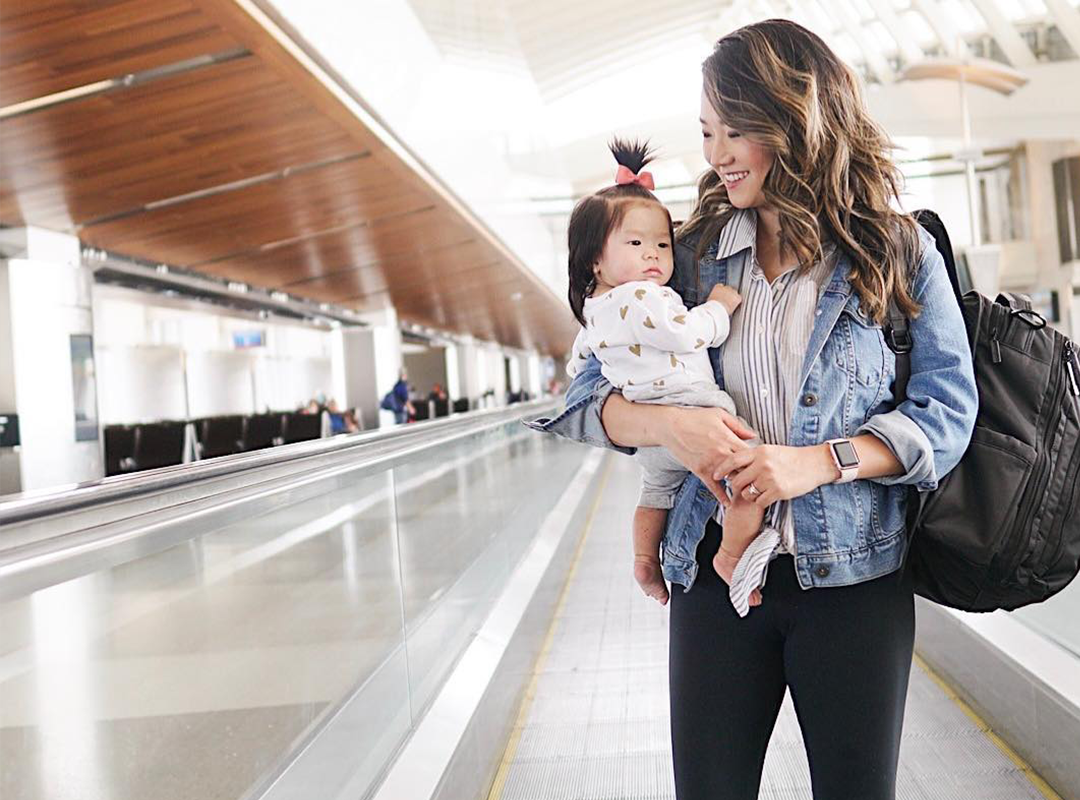
Flying with a baby or toddler is one of the most anxiety-producing parts of family travel for many parents, largely because so much of it is unfamiliar. Most of the worry is manageable once you know what to expect and what to bring.
Is It Safe To Fly With A 6-Month-Old?
For healthy, full-term infants, flying is generally safe from a few weeks of age, though most pediatricians prefer to wait until at least 2 to 4 weeks after birth. By 6 months, the main concerns are ear pressure during altitude changes, the proximity of other passengers and their germs, and the disruption to feeding and sleep schedules.
If your 6-month-old was premature, has had respiratory issues, or has a heart condition, consult your pediatrician before booking. For healthy infants, the AAP's guidance supports air travel with appropriate precautions.
Tips For Flying With A Baby Under 12 Months
Lap Infant Vs. Own Seat
Airlines allow infants under 2 to fly on an adult's lap, but it is recommended to purchase a separate seat for your baby whenever possible. Turbulence can be sudden and severe, and a baby held in an adult's arms during unexpected movement is not protected.
If the budget doesn't allow a separate ticket, try to book a flight with a low load factor, where empty seats are more likely, and bring your FAA-approved car seat onboard. If an adjacent seat is empty, a flight attendant can often confirm you're permitted to use it.
What "FAA-Approved Car Seat" Actually Means
An FAA-approved car seat carries a label that reads: "This restraint is certified for use in motor vehicles and aircraft." That label is required by the Federal Aviation Administration for any car seat used on a commercial flight. Belt-positioning booster seats are not permitted on aircraft, though they can be checked as luggage.
Before your flight, find this label on your car seat and confirm it's there. If you're using a rental car seat, the same rule applies.
How To Help Your Baby's Ears During Descent
Ear pain during a flight happens because the air pressure in the cabin changes faster than the middle ear can equalize through the Eustachian tube, which is smaller and more horizontal in infants than in adults. The solution is simple: swallowing triggers the muscle that opens the Eustachian tube.
For infants, nurse or offer a bottle during descent. A pacifier works as well. For toddlers and older children, encourage sipping a drink through a straw or chewing gum if they're old enough. The key is descent, not ascent, where the pressure differential is greatest.
Tips For Flying With A 1-Year-Old Or Toddler
Imagine a parent who's flying with an 18-month-old for the first time. They pack the diaper bag meticulously but forget that the toddler will not stay seated during boarding, will try to eat the safety card, and will fall asleep exactly 20 minutes before landing. Planning for the experience, rather than an idealized version of it, makes the trip far smoother.
Book a bulkhead seat if possible: the extra floor space is useful. Bring one new small toy or book as a surprise to produce mid-flight when attention is flagging. Download a few videos or songs offline before you board. Pack twice the number of diapers you think you'll need, plus a full change of clothes for the baby and a shirt for yourself.
Build time cushions into your airport plan. Families traveling with young children benefit significantly from arriving at the airport earlier than the standard recommendation.
Navigating Airport Security With Kids
Children aged 12 and under are not required to remove shoes for routine TSA screening. Strollers can be brought through security and gate-checked, which is often the most practical option for families with infants or toddlers.
Talk with your children about the security process before you arrive. Let them know their backpacks and toys will go through a machine and come straight back. This prevents the moment of confusion or distress that can slow everyone down.
What To Pack For A Safe And Comfortable Flight
Pack in your carry-on: age-appropriate snacks, a sippy cup or bottles, diapers and a changing mat, a change of clothes for the child, hand sanitizer, disinfectant wipes for tray tables and armrests, a comfort item like a small stuffed animal, and any medications, including children's pain reliever for ear discomfort or fever.
Wash your hands frequently throughout the flight, especially before eating. The enclosed recirculated air of a plane makes hand hygiene more important than usual.

Hotel Safety Tips For Families - Before You Book And After You Arrive
The hotel room your family sleeps in for a week deserves at least as much scrutiny as the flights that get you there. Most families do their vetting at check-in, but the better approach starts before you even book.
How To Vet A Hotel For Family Safety Before You Book
What To Look For In Reviews Beyond Star Ratings
Read recent reviews specifically from traveling families with young children. Look for mentions of crib availability and condition, balcony access, noise levels, neighborhood safety, and whether the 24-hour front desk was responsive. A five-star rating from business travelers tells you very little about what a family with a crawling baby will encounter.
Questions Worth Asking The Hotel Directly
Before you confirm a booking, contact the hotel and ask; Can you confirm a crib will be available and reserved for our dates? Does the crib meet current safety standards? Are outlet covers available? Does the room have a balcony, and if so, what type of railing does it have? These questions take two minutes to ask and can completely change your accommodation decision.
For families with infants, hotels generally offer more reliable safety infrastructure. For families with older children who need more space, an Airbnb can work well, but you'll need to bring more of your own safety items and do a more thorough inspection on arrival.
Interior Corridors Vs. Exterior Motel Layouts
A room accessed through an interior corridor requires anyone entering to pass through the main lobby, which is monitored by staff. A motel-style room with a door opening directly to a parking lot or exterior walkway has no such buffer.
For families, interior corridor rooms are the safer choice. If exterior access is unavoidable, use the door's additional security latch and be especially consistent about ensuring the door is fully locked before putting children to sleep.
The First 10 Minutes In Your Hotel Room - A Safety Walkthrough
Run this check before anyone unpacks.
The First 10-Minute Hotel Room Safety Checklist:
- Test the main door lock and the security latch or deadbolt from both sides.
- Check that any adjoining room door is locked and cannot be opened from the other side.
- Inspect the balcony door: confirm it locks securely and that the railing is solid with gaps too narrow for a child to climb through or get stuck in.
- Cover all accessible electrical outlets if you have outlet covers in your kit, or move furniture to block them.
- Scan the floor for small objects (coins, bottle caps, pen caps) that could be a choking hazard for infants and toddlers.
- Check curtain and blind cords: older-style corded blinds are a strangulation risk; tie them up or request a room with cordless window coverings.
- If using the hotel crib, inspect it before placing your baby in it: the mattress should fit snugly with no gaps, the slats should be no more than 2 inches apart, and there should be no soft bedding, pillows, or bumpers inside.
- Move any hazardous items (ashtrays, coffee maker, matches, cleaning products left by housekeeping) to a shelf or drawer that the child cannot reach.
- Run the tap water briefly to check the temperature and color. If it's discolored, contact the front desk.
- Locate the nearest emergency exit from your room and note how many doors it is from yours.
This takes less time than it sounds. Most of it can be done while your partner is getting the kids settled.
Pool Safety At Hotels And Resorts
Hotel and resort pools are a genuine hazard for young children, and not all properties maintain the same safety standards. Before letting children near the pool, confirm whether a lifeguard is on duty. If there is no lifeguard, you are the only supervision in place.
Stay within arm's reach of children who are not strong swimmers. Most childhood drowning in residential and recreational pools occurs when a responsible adult is nearby but momentarily distracted. A few minutes is all it takes.
For toddlers, check whether the pool drain system meets current safety standards. Older or poorly maintained drains can create dangerous suction. If anything about the pool area concerns you, trust that instinct.
What To Do If Your Child Gets Out Of The Room
Even with locks and latches, a determined toddler can sometimes surprise you. Before the first night, teach children old enough to understand that they should not leave the room without a parent. For younger children, use the door's secondary latch at a height they cannot reach.
If your child wanders, hotel staff at the front desk are your immediate resource. Share a recent photo with them on arrival if you're staying in a large resort. Some families take a photo of their child every morning during a trip as a reference for what they're wearing that day.
Safety Tips For Families Sightseeing And Out In Public
Being out in a new city with children requires a different kind of attention than you use at home, especially in crowded tourist areas.
The Meeting-Place Rule Every Child Needs To Know
Before you go anywhere with your children, agree on a specific meeting place for your destination. This should be a fixed, visible, easy-to-describe location like the front entrance of a museum, a specific fountain, or the hotel lobby. Every person in your group, including children old enough to understand, should know it.
For younger children who can't navigate independently, designate a type of person to approach if they get separated, a uniformed employee, a hotel or museum staff member, or another family with children. Practice this at home before you leave, not just in theory but as a conversation your child can repeat back to you.
How To Dress, Equip, And Prepare Kids For Crowded Places
In very crowded locations, dress younger children in a bright or distinctive color that's easy to spot in a crowd. Hold hands consistently with toddlers and younger children; if you're in a group with two adults, one in front and one behind is a proven formation for keeping children contained safely.
For children who tend to wander, a GPS wristband or small tracker clipped to a bag gives parents an additional layer of reassurance. These tools are not a substitute for supervision, but they can be genuinely useful in large theme parks, airports, or busy markets.
Stranger Safety And Safe Stranger Identification For Travel
Children who have only been taught to avoid all strangers can freeze or panic when they actually need help. The more useful teaching is the concept of a "safe stranger," which is someone your child can approach to ask for help. Hotel staff, uniformed employees, security personnel, and police officers are practical examples.
International Travel Safety Tips For Families
International trips add a layer of preparation that domestic travel doesn't require, but none of it is particularly complicated once you know what to look for.
How To Read Travel Advisories And What Each Level Means
The U.S. Department of State issues Travel Advisory Levels for every country, ranging from Level 1 (exercise normal precautions) to Level 4 (do not travel). These are available at travel.state.gov. Level 3 and Level 4 advisories warrant serious reconsideration, but it's worth reading the details even for Level 2 countries, because sometimes only a specific region carries elevated risk, not the country as a whole.
Vaccines, Medications, And Health Prep For Kids Traveling Abroad
Some destinations require or strongly recommend vaccines beyond your child's standard schedule. Yellow fever, typhoid, hepatitis A, and malaria prophylaxis are common additions for travel to parts of sub-Saharan Africa, Southeast Asia, and Central and South America.
The CDC's travel health resources at cdc.gov/travellist recommendations by destination. Schedule this visit at least 4 to 6 weeks before you leave. Some vaccines require multiple doses or time to become fully effective.
Food, Water, And Insect Safety In Developing Countries
In countries where tap water safety cannot be confirmed, use bottled or filtered water consistently, including for brushing teeth. For infants on formula, use bottled water only. Stick to cooked foods from reputable vendors and avoid raw produce washed in local tap water.
In regions where mosquito-borne illness is a risk, use insect repellent containing DEET or Picaridin on exposed skin, and use an insect net over prams and sleeping areas for young infants. The World Health Organization recommends DEET products for children over 2 months of age, and Picaridin as an equally effective alternative.
Age-by-Age Quick Reference - Family Travel Safety At A Glance
Traveling With An Infant (0 To 11 Months)
- Car:Rear-facing infant seat, correctly installed, every journey. Stop every 1 to 2 hours on long drives; limit continuous time in the seat to 2 hours maximum.
- Air:Consult a pediatrician first, especially under 4 weeks or if premature. Use an FAA-approved car seat in a purchased seat if possible. Nurse or offer a pacifier during descent.
- Hotel:Bring your own portable travel crib or verify the hotel crib meets CPSC standards. Remove all soft bedding. Infant always sleeps on their back on a firm, flat surface.
Traveling With A Toddler (1 To 3 Years)
- Car:Rear-facing until the seat's maximum weight/height limit is reached, then forward-facing with a full harness. Never compromise on this based on the child's protests.
- Air:Purchase a separate seat when possible. Bring snacks, new small toys, and downloaded entertainment. Expect disrupted nap schedules and plan layover time accordingly.
- Hotel:Run the full 10-minute safety check immediately on arrival. Use the door's highest lock. Remove all reachable hazards. Never leave a toddler unsupervised near water, balconies, or stairwells.
Traveling With A Child Age 4 To 12
- Car:Forward-facing with harness (until harness height/weight limit is reached), then a belt-positioning booster, then a vehicle seat belt when the child fits it properly (around 4 feet 9 inches).
- Air:Children over 40 lbs can use the aircraft seat belt. Still consider an FAA-approved car seat for younger children in this group. Begin teaching children to keep track of their own small bag and personal items.
- Hotel:Review the meeting-place plan and safe stranger concept before sightseeing. Teach older children the hotel address and your phone number. Give them a card with contact information if they cannot yet memorize it.

Pre-Trip Safety Checklist For Families
Save this to your phone or print it before every trip.
Documents And Admin
- Passports valid for at least 6 months beyond the return date
- Visa requirements confirmed for all destinations
- Digital copies of all documents should be saved to the cloud and phone
- Travel medical insurance purchased, and policy details saved
- Pediatrician visit completed (if international travel or child under 6 months)
- Vaccinations up to date; travel-specific vaccines received
Packing
- Age-appropriate car seat packed or rental confirmed with inspection plan
- Travel first aid kit: fever reducer, antihistamine, thermometer, antiseptic, bandages
- All prescription medications should be packed with an extra supply for delays
- Portable travel crib (for infants, if hotel crib safety is uncertain)
- Insect repellent and sunscreen appropriate for the child's age
- Outlet covers and an optional portable door lock
Safety Conversations
- The child knows at least one parent's phone number
- The meeting place should be discussed and confirmed for the destination
- Safe stranger concept reviewed with the child
- Emergency password established for group (optional but useful)
At The Hotel (On Arrival)
- Run the 10-minute room safety walkthrough
- Inspect the crib if using the hotel's
- Test all door locks and the balcony door
- Remove reachable hazards and cover outlets
- Locate the nearest emergency exit
Frequently Asked Questions
What Is The Hardest Age To Travel With Internationally?
Most parents and pediatric travel specialists point to the toddler stage, roughly ages 1 to 3, as the most logistically challenging for international travel.
Should I Bring My Own Crib When Traveling With An Infant?
For infants under 12 months, a portable travel crib is the safest option. Hotel cribs may not meet current Consumer Product Safety Commission standards, particularly in older properties or in countries where different standards apply.
Should Children Carry Identification While Traveling?
Yes, especially in busy tourist areas. Older children can carry a small card with their name, a parent’s phone number, and the hotel address. For younger children, parents sometimes use wristbands, luggage tags on backpacks, or labels inside clothing with contact information.
What Is The Safest Way To Transport A Stroller On A Flight?
Most airlines allow strollers to be used through the airport and then gate-checked just before boarding. Gate-checking reduces the risk of damage compared to checking it with luggage.
How Can Parents Help Kids Adjust To Time Zone Changes When Traveling Internationally?
Gradually shifting sleep and meal times a few days before departure can make jet lag easier for children. Once you arrive, encourage exposure to natural daylight and keep children hydrated. Maintaining familiar bedtime routines can also help children adapt to a new schedule more quickly.
Final Thoughts
By the time you reach this point, you've already done the hardest part. Family travel safety isn't about eliminating every possible risk. It's about making smart, deliberate choices that give your family the best possible chance of a smooth, healthy trip.
The age-specific framework here is designed so you can revisit this article as your children grow and find the advice still fits where they are now. A parent reading about flying with a 6-month-old today will be back looking for tips on long car drives with a toddler in a year, and the sections will still be waiting.
Travel with your kids. Do it often if you can. The exposure to new places, cultures, and experiences genuinely shapes who they become. And now you have a practical, honest roadmap for doing it safely at every stage.
Jump to
Quick Things To Know Before Reading:
Key Safety Takeaways For Family Travel
What Families Need To Know Before Applying Any Travel Safety Tip
5 Important Things To Do Before Traveling With Kids
Travel Safety Tips For Families On The Road
Travel Safety Tips For Families Flying With A Baby Or Young Child
Hotel Safety Tips For Families - Before You Book And After You Arrive
Safety Tips For Families Sightseeing And Out In Public
International Travel Safety Tips For Families
Age-by-Age Quick Reference - Family Travel Safety At A Glance
Pre-Trip Safety Checklist For Families
Frequently Asked Questions
Final Thoughts

Finn Wilde
Author
For Finn Wilde, the wilderness is more than just a destination - it’s a way of life. Over the past decade, he has led multiple expeditions in some of the world’s most remote regions, from the icy fjords of Greenland to the rugged trails of Patagonia.
Finn emphasizes sustainability in all of his adventures, helping participants connect with nature while promoting responsible exploration. His expeditions inspire individuals to explore the great outdoors while fostering a deep respect for the environment.

Liam Jones
Reviewer
Liam Jones has made it his mission to prove that adventure doesn’t need a hefty budget. Having traveled to over 40 countries, he specializes in finding affordable ways to experience the world, from the best street food in Bangkok to hidden gems in Lisbon.
Liam’s travel tips have reached thousands of readers, empowering them to see the world on a shoestring budget without sacrificing quality. With a deep passion for local cultures, he continues to share his travel hacks, ensuring adventure remains accessible to all.
Latest Articles
Popular Articles