OnlySeek Gives Creator Search A Smarter Starting Point
By indexing over 200,000 profiles, OnlySeek is giving users a clearer way to search by category, location, and price.
Author:Finn WildeReviewer:Michael RachalAug 10, 2026120 Shares19.9K Views
People rarely search the internet without some idea of what they want. They look for restaurants by neighborhood, hotels by price, products by category, and music by genre. Creator discovery should work the same way, but in many corners of the creator economy, it still does not.
That problem has become harder to ignore as the market has grown past $80 billion. Creator platforms have attracted millions of accounts, yet the tools available to help audiences sort through them remain limited. OnlyFans alone has over 4 million creators, but its native search offers little support unless a user already knows the exact profile name.
For someone who wants to browse rather than search for a specific account, that creates friction. You may know the city, niche, or subscription range you prefer, but the platform offers few ways to start with those details.
What People Are Already Searching For
The demand for better creator discovery is visible in ordinary search behavior. During its early research, the OnlySeek team found that people were making over 2 million searches per month for phrases related to finding creators.
Some searches focused on categories. Others included location, price, or broad requests such as “best OnlyFans.” People were clearly trying to discover OnlyFans creators through familiar search terms, but the results often led to outdated articles, broken links, or low-quality directories.
That pattern helped define OnlySeek's purpose. Instead of treating profiles as a loose collection of links, the platform organizes them as searchable information.
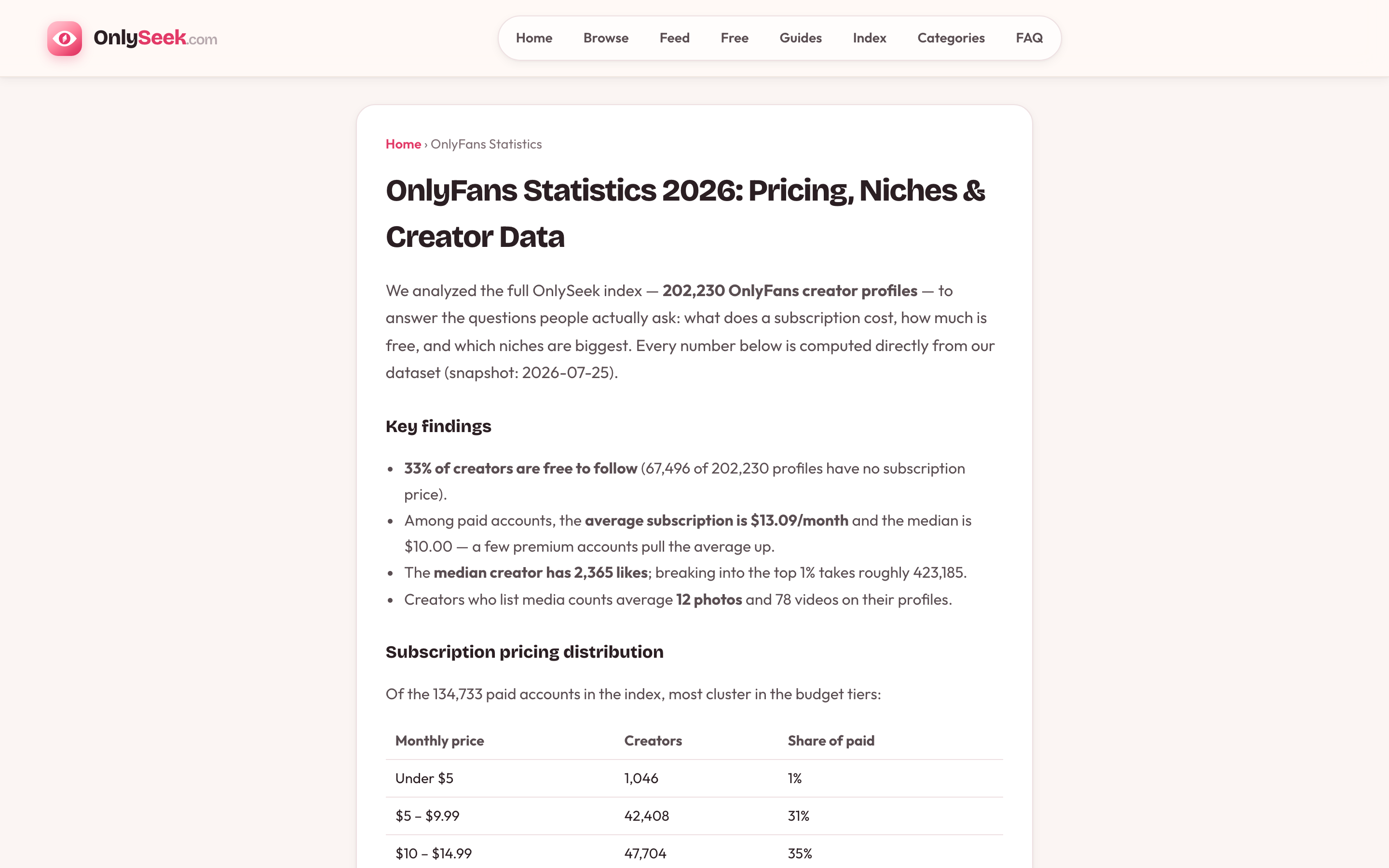
OnlySeek currently indexes over 200,000 profiles. Users can browse by category, location, price, and other available details, allowing them to start with their preferences rather than a username.
From Browsing Blind To Filtering With Purpose
The difference becomes clear in practice. Someone looking for creators in Miami can search by location. Another user can narrow results to a particular category or compare accounts within a preferred price range.
This makes the process feel closer to the search tools people already use elsewhere online. Rather than switching between social media posts, recommendation threads, and scattered profile links, users can apply filters in a single database.
Building that system required a substantial data effort. The OnlySeekteam developed a proprietary pipeline to categorize profiles and add details such as pricing, content volume, and location. The information is also updated over time, which helps address the stale listings that often appear in static directories.
A Search Experience Without Ads
OnlySeekis free to use and does not display advertising. The team designed the platform around a clean interface, with the filters and profile results kept at the center of the experience.
That matters in a category where many directories are crowded with promotional placements. When you search OnlySeek, the goal is to help you compare creators rather than direct your attention toward unrelated ads.
The company plans to add city-specific pages, broader category tools, and analytics features for creators.
It also intends to index profiles from additional creator platforms in the future.
Those plans reflect a larger change in the market. As the number of creators grows, discovery becomes less of a side feature and more of a basic requirement.
The creator economy already has the content, the platforms, and the audience demand. OnlySeekis focused on bringing the search process up to speed.

Finn Wilde
Author
For Finn Wilde, the wilderness is more than just a destination - it’s a way of life. Over the past decade, he has led multiple expeditions in some of the world’s most remote regions, from the icy fjords of Greenland to the rugged trails of Patagonia.
Finn emphasizes sustainability in all of his adventures, helping participants connect with nature while promoting responsible exploration. His expeditions inspire individuals to explore the great outdoors while fostering a deep respect for the environment.

Michael Rachal
Reviewer
Michael Rachal believes that luxury lies in the details. With over 20 years of experience in the luxury travel industry, he has crafted hundreds of bespoke itineraries for clients seeking personalized, unforgettable experiences.
Whether guiding clients through private cultural tours or curating culinary journeys with world-renowned chefs, Michael ensures that each trip is tailored to perfection.
His ability to anticipate needs and exceed expectations has earned him a reputation as a leading expert in luxury travel.
Latest Articles
Popular Articles