How To Survive A Bear Attack - A Comprehensive Survival Guide
So knowing what kind of bear you're up against is the first step in surviving a bear encounter and with this How To Survive A Bear Attack guide, you will learn everything and will be fully prepared if something like that happens.
Author:Maya ReyesReviewer:Sophia HarperAug 28, 2024100.8K Shares1.5M Views
While bear attacks are uncommon, a man should constantly be on the lookout for a bear.
You never know when you'll need anything like this. The way you tackle a bear attack depends on whether you're dealing with a grizzly or a black bear.
So knowing what kind of bear you're up against is the first step in surviving a bear encounter and with this how to survive a bear attackguide, you will learn everything and will be fully prepared if something like that happens.
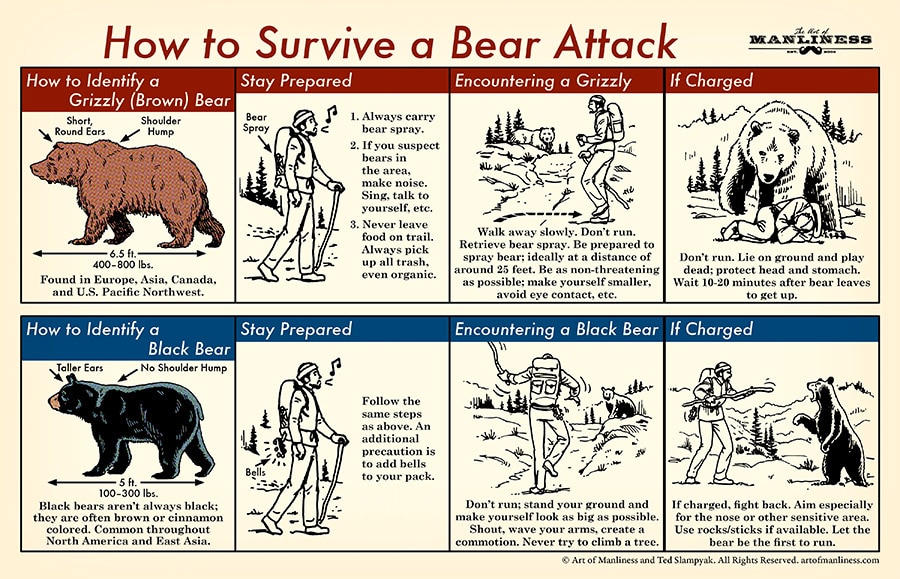
Dossier On Grizzly Bears
Medium to dark brown in color.
Body Type: Has a pronounced shoulder hump. This is the muscle that allows them to dig roots and slice prey with their enormous bear paw.
The grizzly bear stands roughly 6.5 feet tall on average.
Claws: Grizzly claws can be up to 4 inches long.
They are frequently visible from afar.
Grizzlies are primarily found in Canada. However, populations can be found from Alaska to the Pacific Northwest, including Washington, Idaho, the Dakotas, and Montana.
How To Survive A Grizzly Bear Attack?
- Always have bear spray on you. Hikers in bear country should carry bear pepper spray, according to experts. UDAP bear spray contains a high concentration of capsaicin and produces a big cloud. A bear will generally be stopped in its tracks by this material.
- Do not flee. When you run, the bear believes you are prey and will pursue you. You won't be able to outrun a bear; they can reach speeds of 30 miles per hour. As a result, stand firm.
- Lie down in a fetal position on the ground and cover the back of your neck with your hands. This is your next best protection if you don't have bear spray or if the bear continues to charge despite the spray. Curl up into a fetal position as soon as you hit the ground.
- Pretend to be dead. When grizzlies no longer see a threat, they will stop attacking. They won't think you're threatening if they believe you're dead. Continue to pretend dead when the bear has finished tossing you around.
Grizzlies have a reputation for hanging around to see if their prey would get up.
Dossier On Black Bears
Color: Has a wide range of colors, from black to light blond.
Body type: Grizzlies lack the hump on their shoulders.
When on all fours, they are slightly smaller than grizzlies, about 3-4 feet tall.
Claws: Grizzly claws are shorter than bear claws.
The most common bear in North America is the black bear.
They dwell in all of Canada's provinces, as well as 41 of the 50 states in the United States.
What To Do If You're Attacked By A Black Bear
- Always have bear spray on you. Bear spray, like grizzly bear spray, should be your first line of protection in the event of a bear assault.
- Take a firm stance and make a lot of noise. When attacking, black bears frequently bluff. They may lose interest if you show them you're serious about business.
- Do not attempt to climb a tree. Climbing is a strong suit for black bears. Climbing a tree isn't going to assist you here.
- Strike back.
Fight back if the bear actually attacks. Use anything as a weapon, including rocks, sticks, fists, and fangs.
Specifically, target the bear's eyes and snout with your attacks.
When a black bear senses that his or her prey is determined to battle to the end, they usually give up.
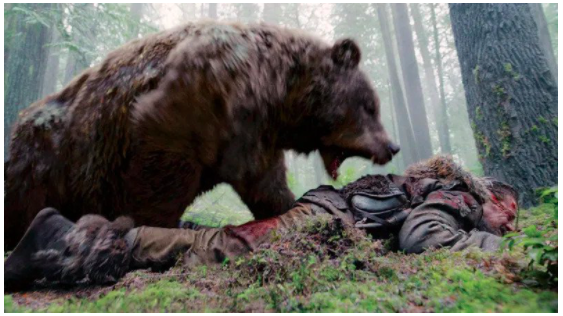
Can A Bear Be Killed By A Gunshot?
If a pistol, such as a 9mm, is fired within a few feet of a black bear and hits the head or heart, it can kill it.
It won't happen right away, so don't count on it.
It's possible that a 12-gauge will be more effective, but there's no assurance.
If you're up against a bear, you might as well piss it off.
In the event of an assault from either sort of bear, don't count on a gun to save your life. Bear spray, on the other hand, will be more effective.
How Can You Know If You're Being Followed By A Bear?
Bears aren't very good at stalking their prey. They're big, lumbering creatures who have a hard time keeping silent.
Stay careful if a bear continues to stare at you and follows you with its eyes instead of walking away.
Which Bear Is The Most Ferocious?
Grizzly bears are by far the most violent bears; black bears, on the other hand, are known for being one of the most tolerant bear species, and would practically never engage in combat.
How Can You Avoid Bear Assaults Or Encounters?
If you're hiking in an area with a lot of bear activity, stick to trails and talk/sing loudly. Bells strung on your bag are also effective, although less so than other loud noises.
Is It Possible For A Bear To Outpace A Human?
Absolutely! Bears have a top speed of 20-30 mph. You should never try to outrun a black or grizzly bear.
How to Survive a Bear Attack
Can You Survive A Bear Bite?
According to one study on bear attacks, “the bear may swat at or bite the victim, but the if victim can retain the presence of mind to lay still, it is likely that he or she will survive the attack.” According to a study of bear attacks in Yellowstone National Parkbetween 1931 and 1984, 80 percent of hikers who fought back against the bears sustained injuries.
Some Extra Precautionary Measures
There is a possibility that you will come across a creature (for example, a grizzly bear) that, if provoked, may cause you serious bodily harm or perhaps death. This possibility varies depending on where you are.
A bear attack isn't something that happens on a regular basis, but it does happen from time to time. Despite the fact that a variety of causes can contribute to such incidents, Mother Nature Network asserts that an increase in the number of human-bear confrontations can be traced back to environmental degradation, such as habitat loss, expanding bear populations, food shortages, and climate change.
The greatest strategy to How To Survive A Bear Attack is, of course, to avoid being attacked in the first place.
When exploring, take extra precautions to protect your food — for example, by hanging a bear bag to deter curious animals — and have a bear deterrent, such as bear spray, with you at all times.
As a bonus, defend yourself while you are in your most vulnerable states (for example, when you are pooping in the woods).
A Funny And Quirky Not-So Bear Attack Video Going Viral On Reddit
The video shows a brown grizzly bear and two men. The bear is moving the branch of the tree continuously like a cute pet animal who is playing with his owner while one man is hanging on the tree and performing some stunts and the other man was jokingly hitting him in his body part. The video was really funny and so cute, but the comments were more enjoyable. Here are some of the comments:
"Haaaa yes anyone can see the bear is calling the shots, also troop movements and rules of engagement"
-splita73
"Bear: Are we gonna seesaw or not?"
-ichegebibble
Conclusion
Even if you are forced to have an interaction with a bear, you should be prepared to deal with the situation appropriately.
In this article, you have gone through the basics of How To Survive A Bear Attack, including particular advice for grizzly bears and black bears.
Jump to
Dossier On Grizzly Bears
How To Survive A Grizzly Bear Attack?
Dossier On Black Bears
What To Do If You're Attacked By A Black Bear
Can A Bear Be Killed By A Gunshot?
How Can You Know If You're Being Followed By A Bear?
Which Bear Is The Most Ferocious?
How Can You Avoid Bear Assaults Or Encounters?
Is It Possible For A Bear To Outpace A Human?
Can You Survive A Bear Bite?
Some Extra Precautionary Measures
A Funny And Quirky Not-So Bear Attack Video Going Viral On Reddit
Conclusion

Maya Reyes
Author
Maya Reyes’s wanderlust was sparked in the temples of Luang Prabang, where the scent of lemongrass and the chants of monks revealed the transformative power of travel.
Since then, her journey has been defined by cultural immersion and authentic connections. From learning batik in Indonesia to sharing meals with nomadic families in Mongolia, Maya seeks experiences that highlight the human stories behind each destination.
Travel for her is a way to weave her narrative into the world’s cultural tapestry, creating bridges across diverse ways of life. Maya has traveled to 15 countries and shares her insights through writing and storytelling.

Sophia Harper
Reviewer
Sophia Harper’s photography acts as a portal to the soul of the places she visits. Drawn to South America’s landscapes and cultures, she has spent years capturing everything from the majesty of ancient ruins to the vibrancy of urban streets.
Sophia’s work isn’t just about documenting moments; it’s about evoking the emotions and stories behind them. A dedicated photographer, she has worked with local communities across South America to capture their rich cultural narratives through her lens.
Latest Articles
Popular Articles