Cusco, Peru - A Journey Through Inca History And Culture
Cusco (Cuzco), Peru, once the capital of the Inca Empire, is a vibrant city renowned for its rich history and stunning architecture. Nestled in the Andes, Cusco (Cuzco) offers visitors a gateway to the Sacred Valley and Machu Picchu, blending ancient Incan heritage with colonial Spanish influences.
Author:Sophia HarperReviewer:Liam JonesDec 28, 202540.8K Shares544.4K Views
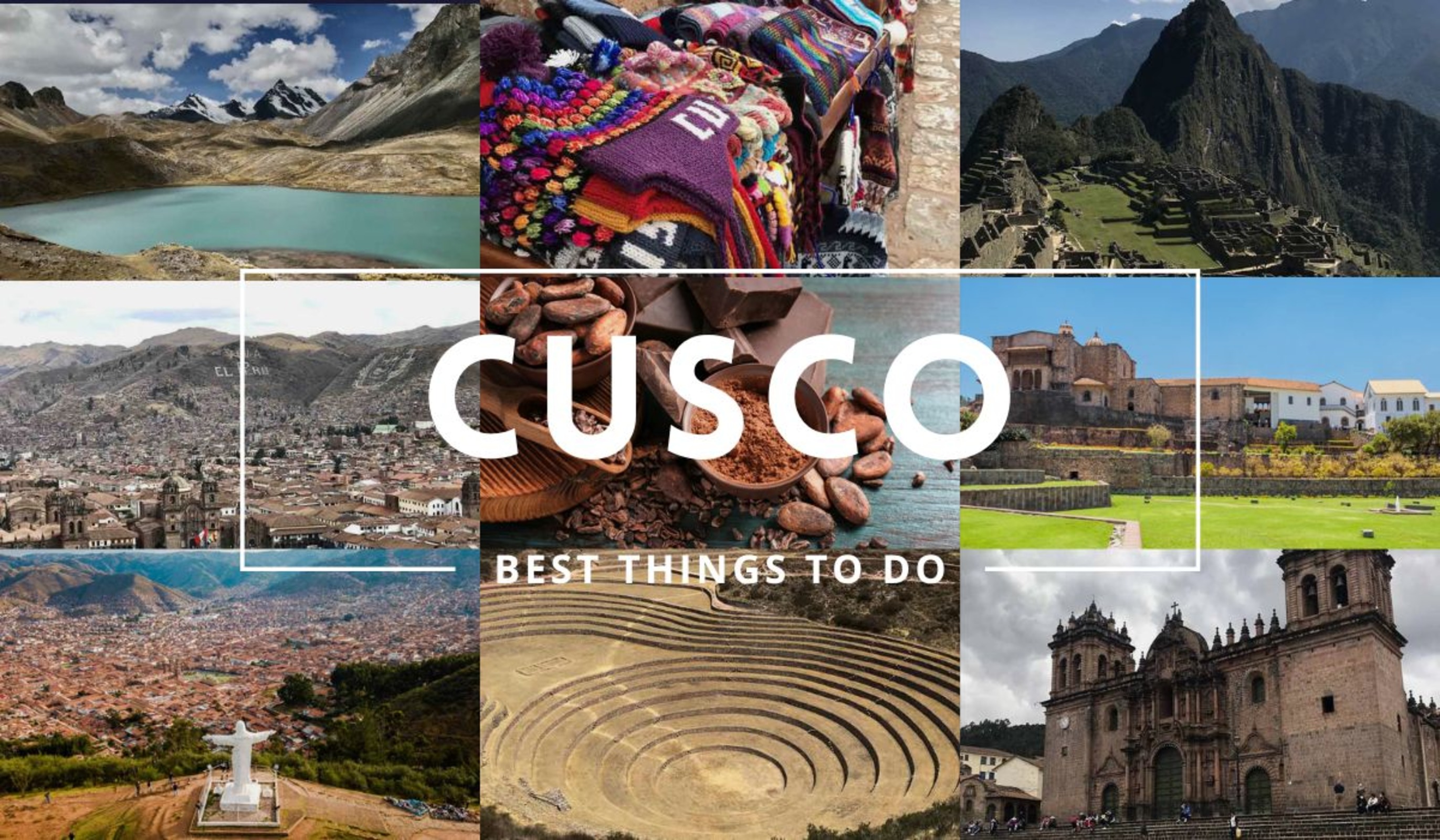
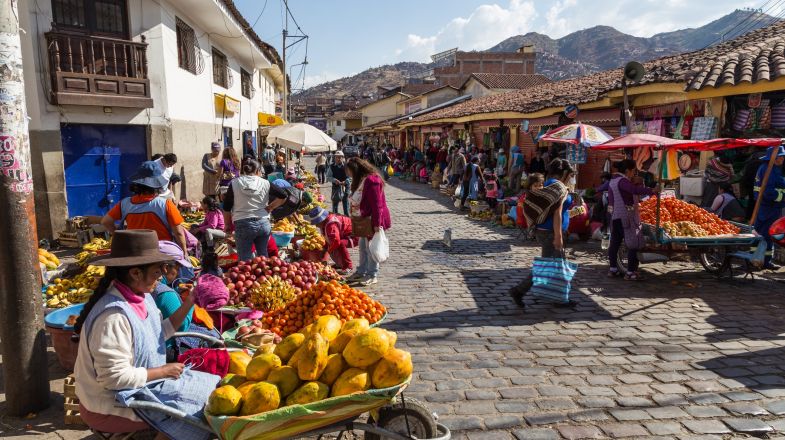
Walking through the cobblestone streets of Cusco (Cuzco), Peru, visitors are immersed in a vibrant atmosphere filled with bustling markets, traditional festivals, and fascinating museums. The city’s main square, Plaza de Armas, is a hub of activity surrounded by historic landmarks such as the Cusco Cathedral and the Church of the Society of Jesus. Whether exploring archaeological sites or experiencing local culture, Cusco (Cuzco) provides an unforgettable journey into Peru's past and present.
Cusco (Cuzco) – Peru, the historic capital of the Inca Empire, is a captivating city nestled in the Andean mountains. Renowned for its rich cultural heritage and stunning architecture, Cusco (Cuzco) offers a unique blend of ancient Incan ruins and colonial Spanish buildings. As a UNESCO World Heritage site, it serves as the gateway to the Sacred Valley and the iconic Machu Picchu, attracting travelers worldwide.
Why Travel To Cuzco
Cusco, previously the capital of the Inca empire is now the capital of Peruvian tourism, a UNESCO World Heritage Site, and the primary destination for most tourists in the country, getting close to a million visitors a year. The official Quechua (Andean Indian language) name for Cusco is now Qosquo. At an altitude of 3, 400m (11, 200ft) Cuzco (as the name is also spelled) is a chilly but charming town, half Inca, half Spanish. Built in the shape of a Puma with the hilltop fortress of Sacsayhuaman as the head, Cusco is one of the world’s prettiest towns and certainly Peru’s.
White walls, three-story colonnaded buildings with terracotta tiled roofs, and lots of woodwork make up the private sector, while the top section of many public buildings is Spanish colonial but the lower half is solid Inca stonework. In one case there is a stone that is estimated to weigh 30 tons, has twelve sides, and fits perfectly into the middle of a wall of similar stones. Or was it 12 tons and 30 sides? Whatever, cement was never used and it is still impossible to get a knife blade into the cracks between the stones.
Food in Cusco is passable, especially if you are fond of Italian cooking as most of restaurants seem to be pizzerias or bistros. Pisco Sour is the traditional tourist drink and very tasty it is too, though usually made with a raw egg so beware if you have a delicate stomach.Hotels range from quite expensive to very cheap while celebrations both big and small regularly offer bizarre spectacles. The bugcrew stumbled into a firework show where men were holding up bamboo frames shaped – among other things – like ships and planes, loaded with rockets, which they fired at each other from a range of two or three meters. The encore was to put on paper mache bull heads with variously fused rockets in place of horns and lunge repeatedly at the crowd, firing rockets at random. Cue for much shrieking and laughing and smell of burning hair.
Cuzco is not a good place to arrive at by plane direct from sea-level Lima, particularly for older, less fit travellers who may not enjoy altitude sickness.Try to arrange a gradual ascent such as taking a land route via Nazca, Arequipa (2, 400m) and possibly Lake Titicaca (3, 800m) if time permits. By the time you arrive in Cusco you will then be fitter, more comfortable in your environment and well acclimatised, ready to enjoy the holiday of a lifetime. Note that Cuzco has few attractions aimed at kids.
Cusco’s Main Attractions
No photos are allowed in Cusco churches, even if you have paid to enter. The authorities mistakenly believe you will buy shoddy old, low-rez postcards if you can’t take your own pictures.
• Sacsayhuaman- A huge Inca fortress on the hill above the town with wonderful views and amazing stonework.
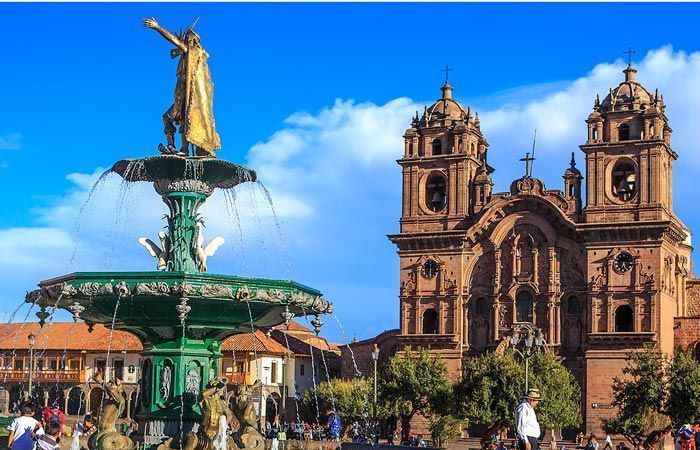
• Plaza de Armas (Huacaypata) - Hang out in the graceful, calm and colonnaded central square, get your shoes shined, see off the hawkers, book tours, chat to other travelers, have a drink, a meal, people-watch, run into a festive procession, visit the churches and so on. This is the heart of Cusco. The Inti Raymi festival takes place here in June.
• Cusco Cathedral - Otherwise known as the Cathedral Basilica of the Assumption of the Virgin. Built in 1654 it’s situated in Plaza de Armas, on the left in the photo above. Unlike most churches in the rest of the world tourists have to pay to enter but the interior is magnificent, loaded with gold (stolen from the Incas), fine woodwork and encompasses 13 varied chapels. A guide is useful. The cathedral is connected to the first Christian church built in Cusco, Iglesia del Triunfo.
• Santo Domingo Convent - Qoriqancha/Coricancha - A classic case of an attractive Spanish church built over the ‘Golden Courtyard’ Inca temple (walls paneled with gold before the conquistadors arrived), now simply loaded with superb masonry.
Step One: enter a lovely 17thC church through a Moorish doorway.
Step Two: enter the cloisters and find an Inca temple, mostly revealed after an earthquake! Brilliant.
• Iglesia de Santo Domingo - Plaza de Armas, dazzling displays of artifacts such as a solid silver altar, fine wood carvings and a Peruvian version of ‘The Last Supper’. Baroque and Soul! No photos allowed tho’.
• Iglesia de la Compania de Jesus (Church of the Society of Jesus) - Plaza de Armas, lots of classy fixtures and fittings and and wonderful views from the front towers.
• Wandering the streets to stumble upon stuff like The Twelve-Sided Stone- An amazing bit of showmanship, this large and superbly cut is embedded in a wall in Calle Hatum Rumiyoc. Photo.
• Barrio San Blas- The arty-farty neighborhood uphill and north of Plaza de Armas, writhing with artists-manqué, neo-hippies, and temporarily settled backpackers. A great place to pick up unique souvenirs, eat alternative, smoke alternative and rhapsodise with bohemians.
• Inca Museum, Unsaac Museo Inca- Displays a fantastic collection of items and information from pre-Inca civilizations through to the Spanish conquest, including the largest trove of Inca objects in the world. All this is located in one of Cusco’s best, half-Inca, half-Spanish Colonial buildings. A bit crude in places but essential for anyone interested in the Inca.
You may consider paying a modest sum for one of the private tour guides standing outside Coricancha or similar locations, they are well worth the money and can explain many interesting facts about Inca construction methods such as how they made their structures earthquake-proof, how they fitted the stones together without cement, about the traditional ceremonies that happened in these temples and so on.
Cusco’s Best Out-of-town Attractions
• Machu Picchu. The biggest Wow factor ever. Take a train to Aguas Calientes + bus and preferably stay at least one night, or even better walk for three days over the mountains on the camino.
• Inca Trail, a totally awesome 3/4 day hike through wonderfully diverse and beautiful scenery on a kind-of garden path. Best walk ever, but hard, mainly due to the altitude of up to 4, 200m.
• The Sacred Valley of the Incas (Urubamba Valley) near Cusco and stretching from Pisac to Ollantaytambo:
• Pisac (Sacred Valley)
• Ollantaytambo. 60 kms NW of Cusco, loaded with Inca history and structures. Also near the start of the Inca Trail.
• Tipon. About 25kms and an hour bus ride from Cusco plus 45 minutes walk uphill, so take a taxi if you’re feeling flush! This ruined Inca retreat for royalty (possibly) offers excellent views, fountains, terraces and irrigation systems.
Saksaywaman (Sacsayhuaman)
Sacsayhuaman was originally a Killke culture fort built around 1100, captured and expanded by Inca Pachacuti around 1450. The fort, a place for worship as well as defence, was the location of the final defeat of the Incas by the Conquistadors in 1536 and the Spanish proceeded to strip off many small stones to build churches in Cusco.
Still, there’re plenty of superb sights and atmosphere up in the fort even if it was ravaged by the Spanish and a walk around Sacsayhuaman is an absolute must-do, Cusco’s premier attraction. It’s also spelled as Saksaywaman, Saqsaywaman, Sasawaman, Saksawaman and so on. The fort is just a couple of kilometres uphill from central Cusco, but that’s at high altitude, so consider your transport options.
Inti Raymi
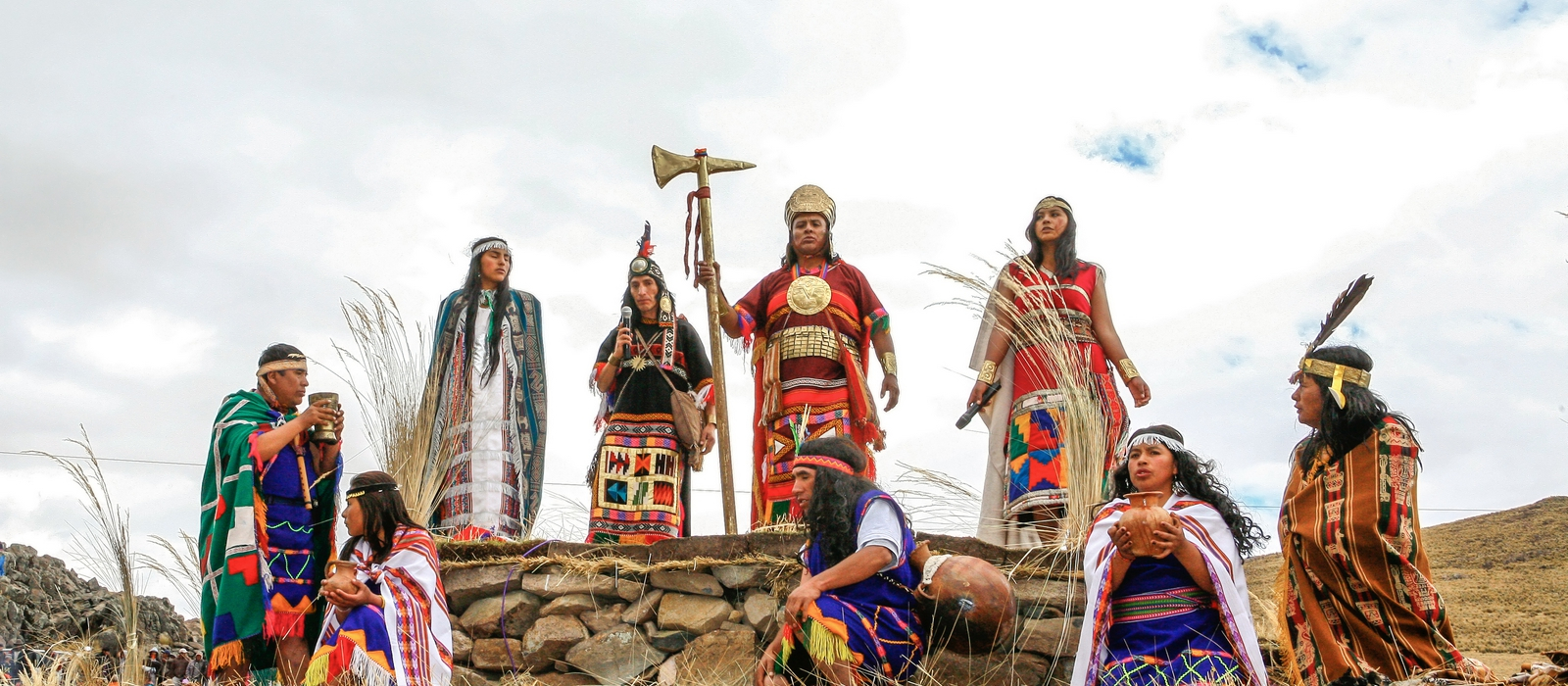
The Inti Raymi, ‘Festival of the Sun’, is a dazzling religious ceremony held in Sacsayhuaman in honour of the Inca sun god, Inti, marking the summer solstice. With a week of festivities, the actual day of Inti Raymi is June 24. In the hills above Cusco there are also some curiously cut caves in what is known as Zone X. These could be source of building blocks for Cuzco or they could have had some indepenent purpose. No one seems to know. Photo by McKay Savage.
Cusco Weather
April-October is the dry season with warm, sunny days, highs around 20C/68F but chilly, near zero nights (it is winter after all! ). November-March is the wet season, with especially heavy rain December-February, daily highs also around 20C but warmer nights around 6C/42F.
Note that the 3, 400m elevation here not only offers the average tourist flying in from Lima the chance to experience altitude sickness but also to freeze at night and burn during the daytime. UV measurements in 2006 indicated that Cusco received the highest Ultraviolet light on Earth.
Our advice is. . a) avoid sunstroke by wearing a hat during the middle of the day at least. b) avoid altitude problems by traveling by road from Lima up to mid-altitude Arequipa via Nazca, then on to high, cold and less interesting Puno (3, 800m) on the edge of Lake Titicaca, before catching the train to Cusco (lower and warmer). c) bringing some compact but seriously warm clothing, whatever the season in Peru.
Getting To Cusco
• Fly in via Alejandro Velasco Astete International Airport, but really beware altitude sickness, from Lima at sea level to Cusco’s 3, 400 metres (11, 200 ft) in one hour! You may well be in for several days of extreme unpleasantness, migraine/nausea/lighthead/weakness which could disrupt holiday plans.
• Train (recommended) from/to Puno, but only three times a week so book ahead. This popular but expensive 12-hour train journey crosses the altiplano with foreigners locked in their own railcar by guards, past dozens of white Andean peaks and hundreds of brown llamas. An excellent alternative is the first-class bus ride with Cruz del Sur listed below – fast, comfortable, entertaining, and one-fifth of the train cost!
• Bus from/to Puno/Lake Titicaca(8 hours), possibly with beds, or Arequipa (6 hours).
• Buses to/from La Paz, Bolivia, can be difficult, especially since guidebook advice and bus company websites seem to be always out of date and various scams are perpetrated such as selling bed seats that don’t exist.
• Buses from Lima take a minimum of 21 hours to reach Cusco on very hairy, windy, partially unmade roads.
• Car Hire/Self-drive is not recommended for Andean roads as they are narrow, endlessly serpentine, and spectacularly dangerous.
Cusco, Peru - FAQs
How Safe Is It To Travel To Cusco?
Cusco is generally safe for tourists, but it's wise to take standard precautions such as avoiding poorly lit areas at night and keeping an eye on personal belongings.
What Are The Best Hiking Trails Around Cusco?
The Inca Trail to Machu Picchu is the most famous hike, but other notable trails include the Salkantay Trek, Lares Trek, and Ausangate Trek.
Can I Use Credit Cards In Cusco?
Credit cards are widely accepted in major hotels, restaurants, and shops in Cusco, but it's a good idea to carry some cash for smaller establishments and markets.
Do I Need To Learn Spanish To Visit Cusco?
While many people in the tourism industry speak English, learning a few basic Spanish phrases can enhance your experience and help with interactions in local markets and restaurants.
Are There Any Medical Facilities In Cusco?
Yes, Cusco has several hospitals and clinics that can provide medical care to travelers.
What Are The Best Day Trips From Cusco?
Popular day trips from Cusco include visiting the Sacred Valley, Maras Salt Mines, Moray archaeological site, and Rainbow Mountain.
How Can I Experience The Local Culture In Cusco?
To experience local culture, attend traditional festivals, visit local markets, try regional foods, and explore historical sites and museums. Engaging with local guides can also provide deeper insights into the area's culture and history.
Final Words
Cusco, Peru, is a city rich in history, culture, and natural beauty, making it a must-visit destination for travelers. From its role as the gateway to the iconic Machu Picchu to its vibrant local markets and festivals, Cusco offers a unique blend of ancient Incan heritage and modern-day Peruvian life. Whether you're exploring the architectural marvels, savoring traditional cuisine, or hiking the breathtaking trails, Cusco promises an unforgettable experience. As you plan your visit, remember to prepare for the high altitude and immerse yourself in the local customs to fully appreciate everything this remarkable city has to offer.

Sophia Harper
Author
Sophia Harper’s photography acts as a portal to the soul of the places she visits. Drawn to South America’s landscapes and cultures, she has spent years capturing everything from the majesty of ancient ruins to the vibrancy of urban streets.
Sophia’s work isn’t just about documenting moments; it’s about evoking the emotions and stories behind them. A dedicated photographer, she has worked with local communities across South America to capture their rich cultural narratives through her lens.
Liam Jones
Reviewer
Liam Jones has made it his mission to prove that adventure doesn’t need a hefty budget. Having traveled to over 40 countries, he specializes in finding affordable ways to experience the world, from the best street food in Bangkok to hidden gems in Lisbon.
Liam’s travel tips have reached thousands of readers, empowering them to see the world on a shoestring budget without sacrificing quality. With a deep passion for local cultures, he continues to share his travel hacks, ensuring adventure remains accessible to all.
Latest Articles
Popular Articles