Easter Year Pictures - Why Visit Easter Island As A Vacation Destination?
Although it lacks a significant activity center and requires a lengthy, expensive flight from the mainland, Chile's Easter Island (annexed by Chile in 1888) is sparsely developed, has a small Polynesian population, and displays some of the world's strangest artifacts in a barren, volcanic landscape alongside a bizarre, apparently self-destructive history. You can see here the Easter Year Pictures of Chile's Easter Island and if you can afford it, this place is a must-see.
Author:Sophia HarperReviewer:Liam JonesApr 04, 2022236.8K Shares3.2M Views
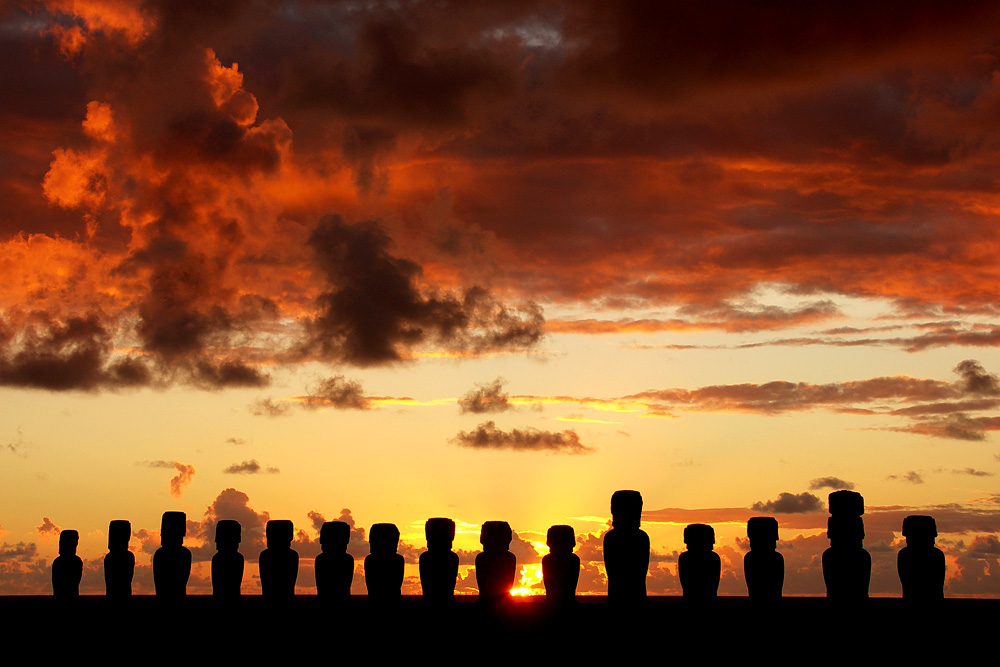
Although it lacks a significant activity center and requires a lengthy, expensive flight from the mainland, Chile's Easter Island (annexed by Chile in 1888) is sparsely developed, has a small Polynesian population, and displays some of the world's strangest artifacts in a barren, volcanic landscape alongside a bizarre, apparently self-destructive history. You can see here the Easter Year Picturesof Chile's Easter Island and if you can afford it, this place is a must-see.
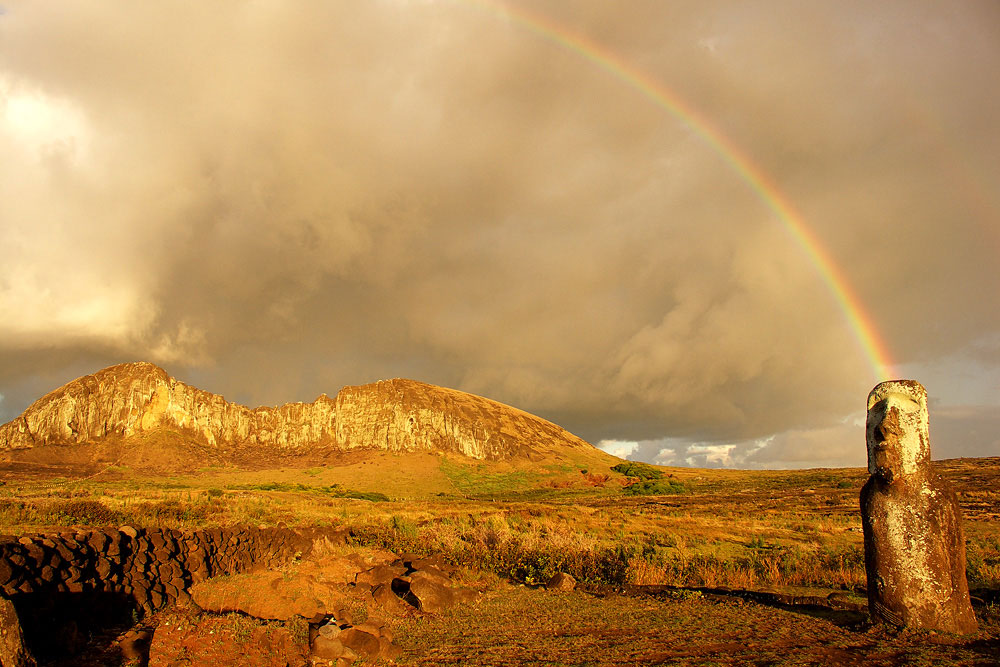
On the left is a view of Rapa Nui's Rano Raraku quarry, where the majority of moai were carved, however the occasional red top hat originated from the Puna Pau crater in a different area. A hundred metres to the right is a lone moai.
A Brief History Of Rapa Nui
Pollen evidence indicate the presence of forests of trees, including enormous palms, around the year 200 AD, and human settlement between 300 and 800 AD, depending on who you believe. Large fishing canoes, palm huts, edible nuts, and wood stoves would have sufficed to provide for the people's basic needs.
Who Are The Moai?
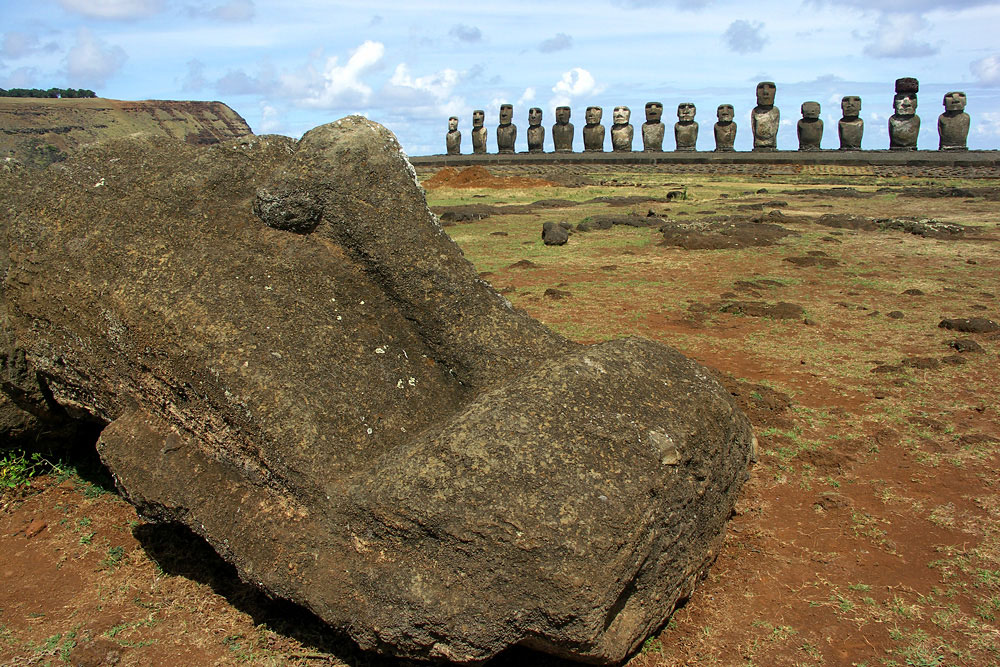
Over 200 statues previously stood along the island's coast on ahu (ceremonial platforms), having been brought up to 10 kilometers (6 miles) from the Rano Raraku crater by sleds oiled with sweet potatoes (porous rock). Around 400 statues remain in the quarry, both inside and outside of the crater.
Moai range in size from less than a metre to 11m (33ft) tall and weigh 82 tonnes, though one remains in the quarry that is 20m long and weighs over 250 tons (pictured later).

Moai were presumably created around AD 500 as a kind of ancestor acknowledgment or worship by five distinct clans that shared ownership of the island; the majority of the moai have an inland-facing aspect, indicating that the clans believed the moai were watching over and protecting their people.
The peak of moai production occurred in AD 1400, when the island's population reached 20,000 and the size of moai became highly competitive.
When a Dutch explorer named Roggeveen visited on the island on Easter Day 1722, the first European visit documented, all the moai stood erect, but when Captain Cook stepped ashore 52 years later, almost all had been overturned.
First Thoughts The Collapse Of The Rapa Nui Culture
Archaeologists discovered no indication of a natural calamity (volcanic eruption, tidal surge), concluding that Easter Island is a textbook case of human habitat self-destruction.
Due to the increased need for wood for moai building and transportation, as well as the increased demand for housing and boats to accommodate the island's growing population, the island's forests became deforested.
Fishing boats shrunk in size and efficiency, soil deteriorated, and crops suffered stunting. As a result, famine and inter-clan warfare occurred, as evidenced by archeological findings of an abrupt increase in obsidian (a hard stone) weaponry in the 17th century, as well as beaten-to-death corpses and caves used as sanctuaries.
When the white man's gigantic ship came, the islanders witnessed the wealth and elegance of the 'aliens' and were appropriately awestruck (according to Roggeveen's own tales), realizing their own poverty and style of life. This resulted in the realization that their forefathers were not protecting them; on the contrary, the moai obsession had devastated the land.
Thus, clans demolished other clans' moai, and probably their own, until Captain Cook came in 1774, when the enormous statues were generally face-down in the dirt.
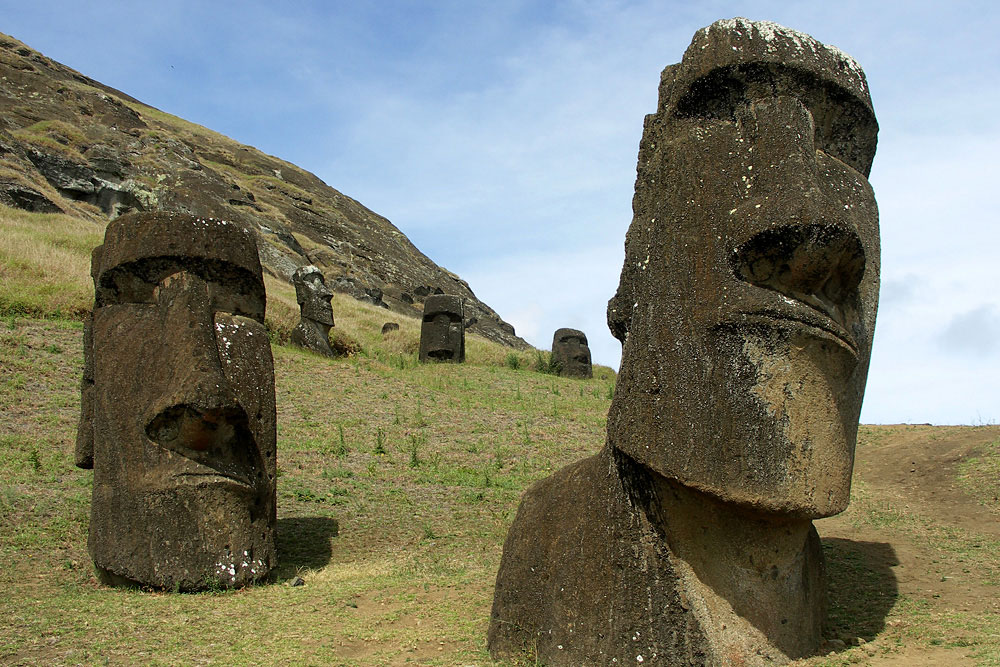
Until 1955, when Norwegian adventurer and Kon Tiki builder Thor Heyerdahl re-erected the first moai. Although about 17% of the trees are now upright, erosion is doing havoc.
Around 400 statues in various stages of creation remain strewn around the crater's exterior and interior.
Rapa Nui is triangular in shape, measuring 23 kilometers long by 11 kilometers wide, and was formed by the eruption of three volcanoes. The overall area is 171 square kilometers. There are only two sandy beacheson the island.
This is one of our favorite locations on Rapa Nui, along with...
Genocide In Rapa Nui
When the Dutch arrived in 1772, all moai were standing and the Rapa Nui people appeared healthy and pleasant - with the exception of a'minor misunderstanding' that resulted in some shooting.
In 1770, two Spanish ships visited and reported that every moai remained upright. However, when British explorer Captain James Cook arrived in 1774, he noted that some moai were laying face down and that the indigenous people appeared to be ill, impoverished, and famished.
The current assumption is that, similar to the Maya and Aztecs in central America, Europeans accidentally introduced horrible diseases to indigenous peoples who lacked antibodies. Hundreds of islanders were wiped out by smallpox and tuberculosis outbreaks. However, this was only the beginning...
Slavery
The next crushing blow to Rapa Nui society came with the arrival of slavers from North America and Peru between 1805 and 1860, who abducted up to half of the island's population, taking the strongest and healthiest individuals they could find, including the chief and heir, who were among the few who could read and write the island's only Polynesian script, rongorongo.
Farming Sheep
By the mid-nineteenth century, the indigenous population was small and vulnerable, and a Frenchman, Dutrou-Bornier, acquired the majority of the island with little money and a lot of force. He imported 70% of the island's sheep, who ate anything green and were subsequently sold for meat. At the turn of the century, Rapa Nui had a population of just over 100 indigenous people.
Sheep farming lasted until 1953, most recently under the auspices of Chile, which conquered the island in 1888 after 'purchasing' the island's sheep ranch.
Weather
Climate: subtropical, with a yearly average temperature of 20 degrees Celsius. The peak tourist season runs from September through April, during the drier months and midsummer.
August/mid-winter is the coldest month (15C-18C). February/summer is the hottest month (24C-27C).
May is the wettest month (16cm of rain). September is the driest month.
Takeaway
Rapa Nui's enigmatic moai statues stand silently but speak eloquently about their creators' accomplishments. It is a miracle that Polynesian people ever made it to Rapa Nui. While getting there is much easier today, the island remains somewhat remote. Rapa Nui is accessible via long flights from Santiago, Chile and Tahiti.Rapa Nui's enigmatic moai statues stand silently but speak eloquently about their creators' accomplishments. It is a miracle that Polynesian people ever made it to Rapa Nui. While getting there is much easier today, the island remains somewhat remote. Rapa Nui is accessible via long flights from Santiago, Chile and Tahiti.

Sophia Harper
Author
Sophia Harper’s photography acts as a portal to the soul of the places she visits. Drawn to South America’s landscapes and cultures, she has spent years capturing everything from the majesty of ancient ruins to the vibrancy of urban streets.
Sophia’s work isn’t just about documenting moments; it’s about evoking the emotions and stories behind them. A dedicated photographer, she has worked with local communities across South America to capture their rich cultural narratives through her lens.

Liam Jones
Reviewer
Liam Jones has made it his mission to prove that adventure doesn’t need a hefty budget. Having traveled to over 40 countries, he specializes in finding affordable ways to experience the world, from the best street food in Bangkok to hidden gems in Lisbon.
Liam’s travel tips have reached thousands of readers, empowering them to see the world on a shoestring budget without sacrificing quality. With a deep passion for local cultures, he continues to share his travel hacks, ensuring adventure remains accessible to all.
Latest Articles
Popular Articles