Planning To Travel In Tunisia? Discover The Famous Exotic Destinations Here
In this post-pandemic period, travel in Tunisia is one of the most worthwhile destinations to add to your itinerary. Tunisia is Africa's northernmost country. With a population of 11 million people, it is a relatively tiny country with a well-educated populace.
Author:Sophia HarperReviewer:Liam JonesApr 04, 2022163.2K Shares3.2M Views
In this post-pandemic period, travel in Tunisiais one of the most worthwhile destinationsto add to your itinerary. Tunisia is Africa's northernmost country. With a population of 11 million people, it is a relatively tiny country with a well-educated populace. Tunisia is the smallest country in North Africa, but its culture and identity are founded on centuries of cross-cultural and ethnic interactions.
Why Should You Go To Tunisia For Vacation
Tunisia provides an enticing combination of likely weather, beautiful beaches, and stunning ancient monuments, among other things. Due to the fact that the country appears to be predominantly geared toward package visitors, hotels are well-equipped to accommodate and entertain this type of clientele.
History? Hannibal grew up here, Carthage is on the outskirts of Tunis, and Matmata was the location for some of the Star Wars filming. Have you had enough of Roman ruins and beaches? The sand dunes of the Sahara and a thousand disgruntled camels are waiting for you. And all of this comes at a reasonable cost, with fair and varied food that is generally superior to that of the country's northern African neighbors.
What Is The Weather And Climate Like In Tunisia
Northern mountainous regions experience a Mediterranean climate marked by moderate, wet winters and scorching, dry summers. As it enters the Sahara Desert, the south experiences a hot, dry, and semiarid environment, while the eastern coastal boundary experiences an arid steppe climate.
Tunisia's Famous Exotic Destinations
Tunisia is famed for its summer heat and coastline, but there is much more to see. With its rolling dunes and isolated oases, the Sahara offers adventure tourist opportunities in the south, while the ruins of old towns dot the lush hill area in the north, making for simple historic day trips from Tunis.
Carthage
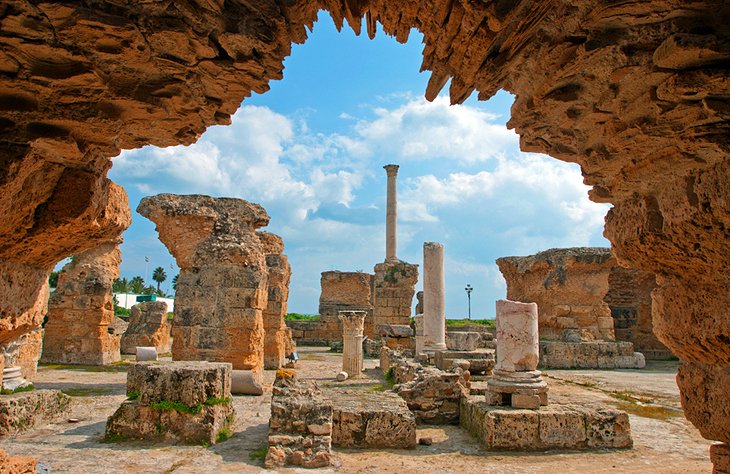
Carthage, formerly a key adversary of Rome, was the port city of the seafaring Phoenicians, whose exploits were immortalized in the Punic Wars. However, these UNESCO World Heritage-listed ruins are extremely significant historically, and any traveler interested in North Africa's ancient past should make a point of paying a visit to this location.
Sidi Bou Said
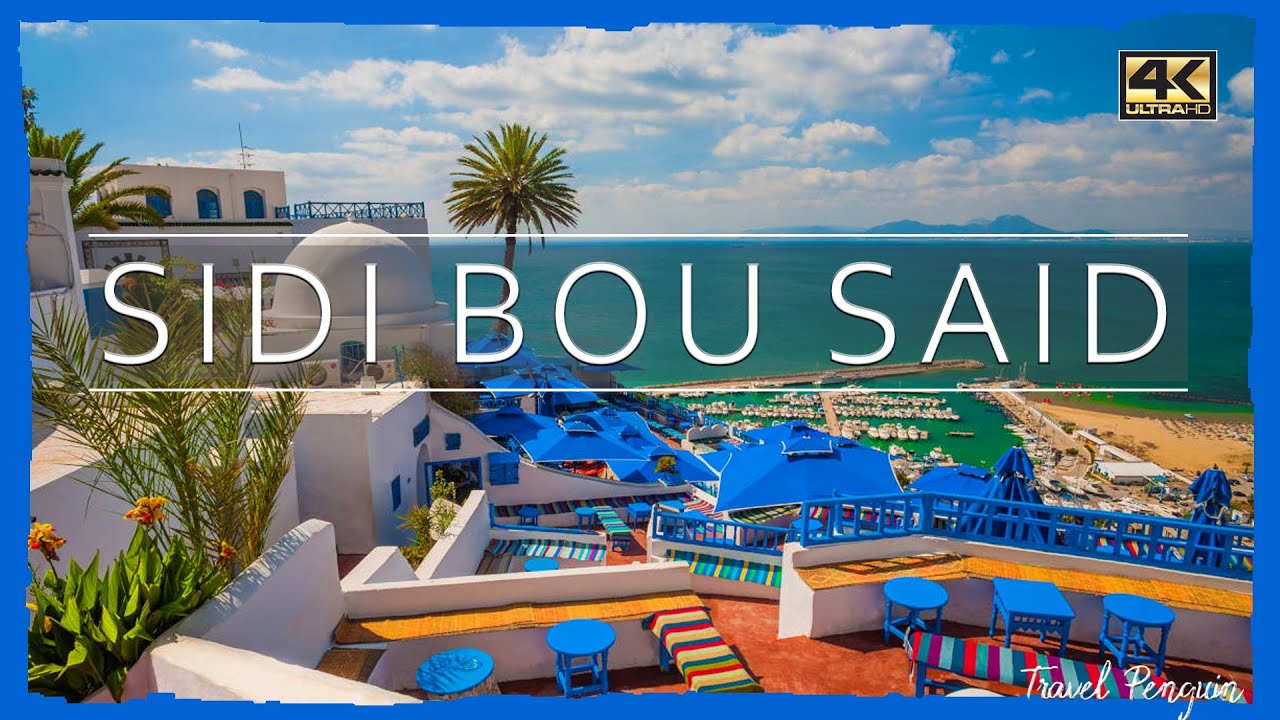
Sidi Bou Said ● Tunisia 🇹🇳 【4K】 Cinematic Travel Video
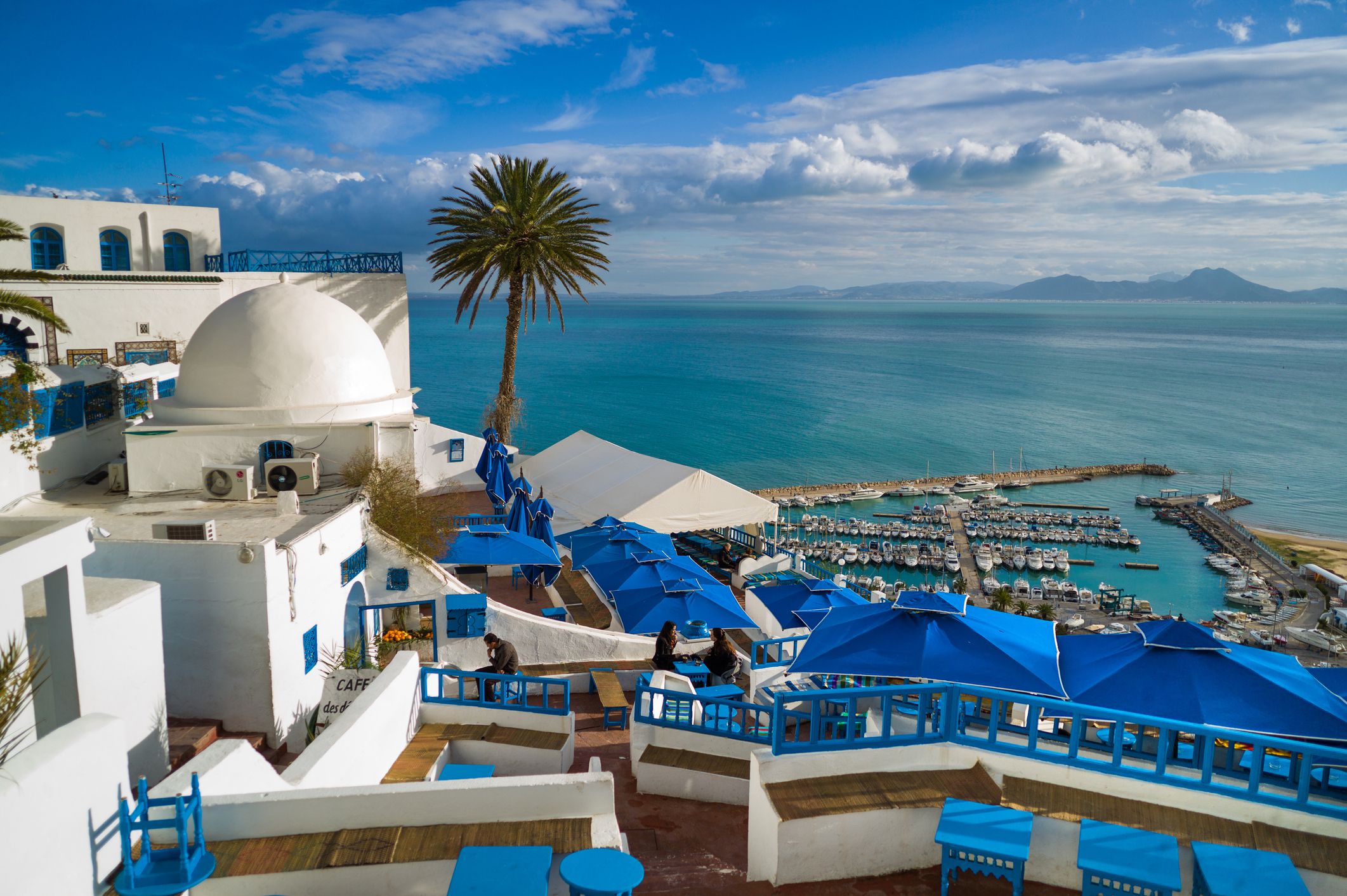
Sidi Bou Said is a small village on a cliff that looks like it fell off an artist's canvas. Sidi Bou Said, a small town on a cliff overlooking the Mediterranean, is known for its cobbled streets and blue-and-white houses. There are al fresco cafes, Tunisian restaurants, and small art galleries in the town. Ennejma Ezzahra Palace was built in the early 20th century and has arches, ornate stucco, and patterned tiles. Dar El Annabi is a historic house with wax figures dressed in traditional clothes. It is near a sandy beach.
Hammamet
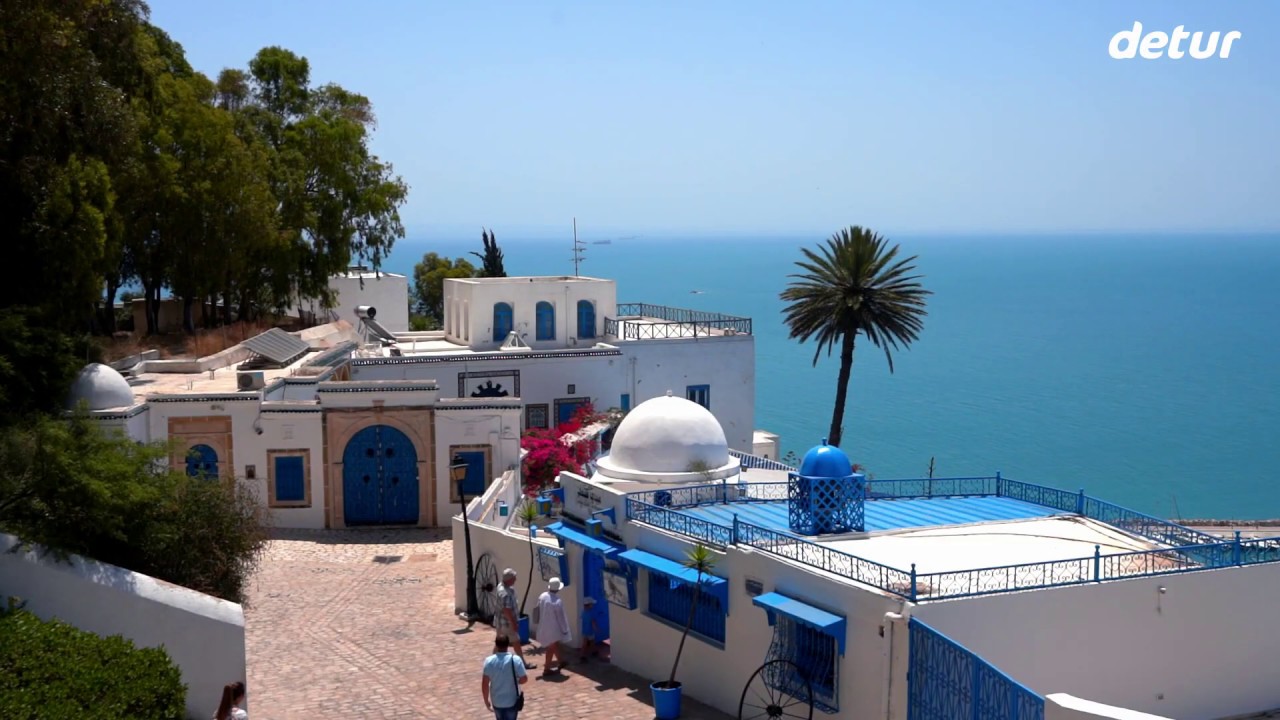
Hammamet Travel Video | Holiday in Hammamet Tunisia| Detur
A lot of people go to Hammamet to go to the beach. This quiet town on the Cap Bon Peninsula is Tunisia's top sun and sea resort. It's all about relaxing beach trips. Mediterranean charm is everywhere in the town, with its pretty white buildings next to a bright blue sea. People who come to sunbathe on the soft, white sand are charmed by its Mediterranean charm.
It doesn't take long for many people who come to this place to do nothing but walk around the old town and shop in the restored old town souks. It's a place where you don't have to worry about anything. It has all the things that make Tunisia great in one pretty package.
Sousse
With its big fort, mosque, towering city walls, relaxing Medina, and magnificent museum of3rd-centuryy mosaics, Sousse is the perfect beach town. Every year, 1,200,000 people visit its hotels, restaurants, nightclubs, casinos, beaches, and sports facilities. Sousse is a renowned tourist destination because of its nightlife.
Kairouan
Kairouan has a magnificent Great Mosque and other fine buildings. Kairouan, the earliest Islamic city in the Maghreb, is one of Islam's holiest cities. Uqba ibn Nafi, an Arab general, and leader of Islamic conquests crossed the dunes to conquer the Maghreb.
What Are The Top Leisure Activities In Tunisia
- Clubbing and nightlife.
- Treking and Birdwatching.
- Golf.
- Hunting.
- Water sports.
- Sailing.
- Scuba diving.
- Adventure races and rallies.
Is Tunisia A Safe Country
Tunisia is a safe country in general, yet small crime is quite prevalent. To reduce the chances of things going wrong, you should stay cautious and take all available precautions.
What Language Do They Speak In Tunisia
Tunisia's official language is Arabic.
Does Tunisia Speak English
Tunisia's main foreign languages are French, English, and Italian, which are the most widely spoken. Because of the region's proximity to Europe, European languages have become increasingly popular in the country. There is also a considerable Turkish-speaking community in Tunisia.
Is Tunisia Safe For Travel
At Level 4, it is not recommended to travel. Due to COVID-19, it is not recommended that you travel to Tunisia. Tunisia should be approached with caution owing to the threat of terrorism. Some locations are at greater risk than others.
Can UK Travel To Tunisia
Tunisia will accept certification of COVID-19 recovery and vaccination records from the United Kingdom. In response to events, curfews and lockdowns could be implemented on short notice. When traveling around the country, you should follow the advice of local authorities.
Conclusion
Tunisia is a hidden gem in North Africa. Tunisia is a country that is easy to overlook on an African map. Despite this, it provides a fantastic vacation experience that few other African destinations can match. When you visit Tunisia, you'll see that nature and history are two of the country's most appealing things.
Jump to
Why Should You Go To Tunisia For Vacation
What Is The Weather And Climate Like In Tunisia
Tunisia's Famous Exotic Destinations
What Are The Top Leisure Activities In Tunisia
Is Tunisia A Safe Country
What Language Do They Speak In Tunisia
Does Tunisia Speak English
Is Tunisia Safe For Travel
Can UK Travel To Tunisia
Conclusion

Sophia Harper
Author
Sophia Harper’s photography acts as a portal to the soul of the places she visits. Drawn to South America’s landscapes and cultures, she has spent years capturing everything from the majesty of ancient ruins to the vibrancy of urban streets.
Sophia’s work isn’t just about documenting moments; it’s about evoking the emotions and stories behind them. A dedicated photographer, she has worked with local communities across South America to capture their rich cultural narratives through her lens.
Liam Jones
Reviewer
Liam Jones has made it his mission to prove that adventure doesn’t need a hefty budget. Having traveled to over 40 countries, he specializes in finding affordable ways to experience the world, from the best street food in Bangkok to hidden gems in Lisbon.
Liam’s travel tips have reached thousands of readers, empowering them to see the world on a shoestring budget without sacrificing quality. With a deep passion for local cultures, he continues to share his travel hacks, ensuring adventure remains accessible to all.
Latest Articles
Popular Articles